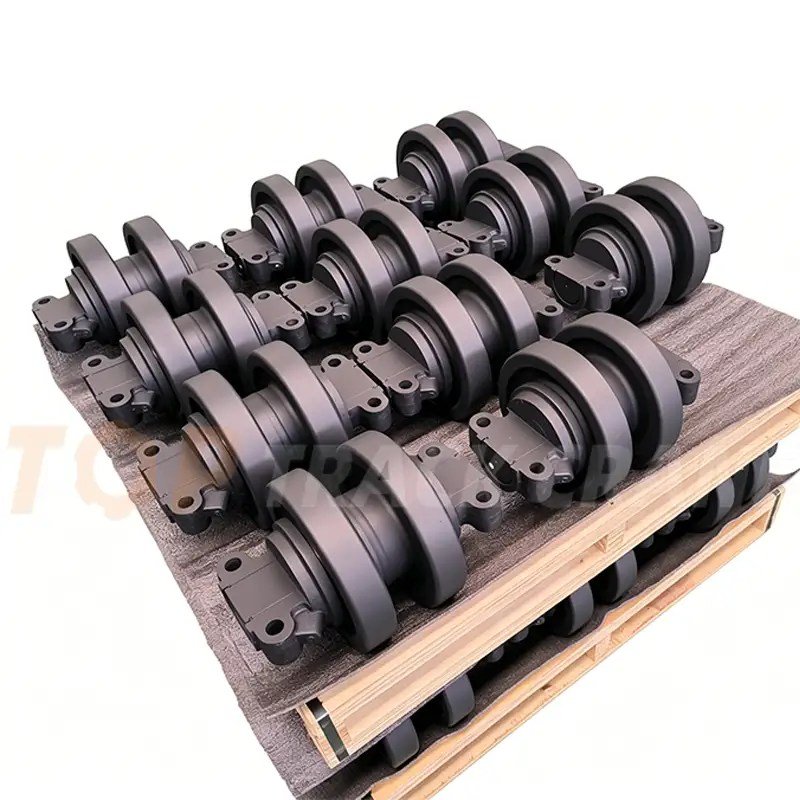
I have seen many excavators continue working with worn rollers. The machine still moves, but the undercarriage slowly becomes less stable. Repair costs can then rise quickly.
Bottom rollers carry most of the excavator’s weight and guide the track chain from below, while top rollers support the upper track chain. I choose both types by checking the machine model, part number, dimensions, material, heat treatment, working conditions, and required service life.
I used to think roller selection was mainly about matching the excavator model. After working with different undercarriage parts, I learned that the working condition matters just as much. A roller that works well on a normal construction site may not give the same service life in a quarry or mining site.
Why Are Bottom Rollers and Top Rollers So Important on an Excavator?
I consider rollers one of the most important parts of an excavator undercarriage. They keep the track chain moving and help the machine stay stable during operation.
Bottom rollers support the excavator’s weight and guide the lower track chain, while top rollers support the upper track chain. Both rollers must match the track system because incorrect dimensions can cause uneven wear, poor alignment, and higher undercarriage costs.
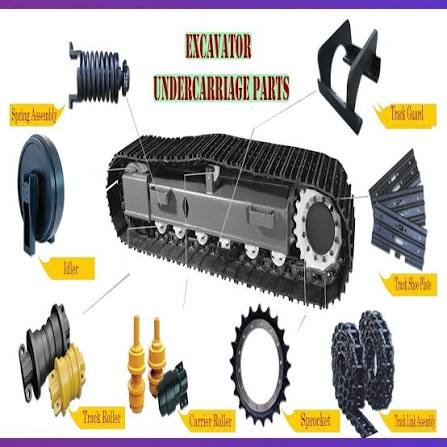
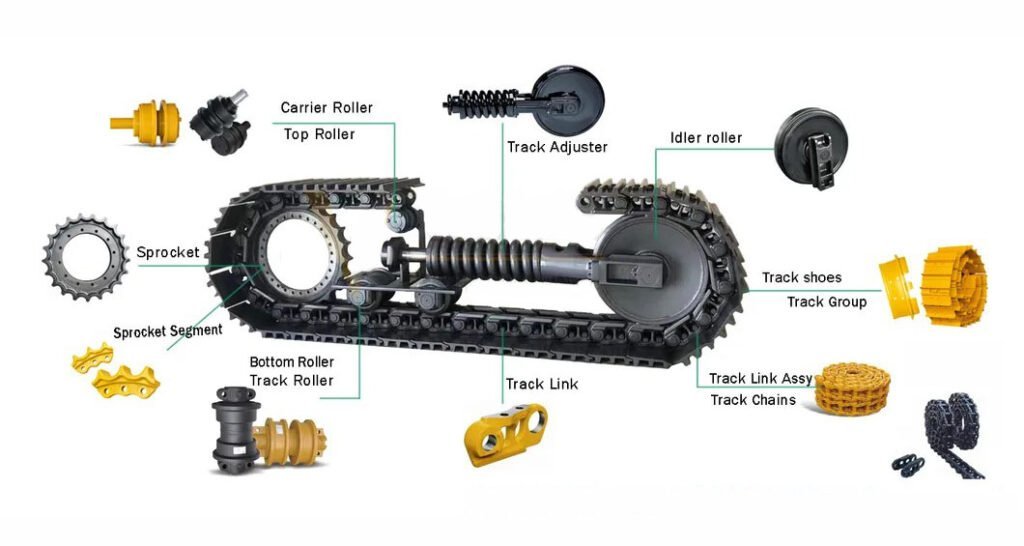
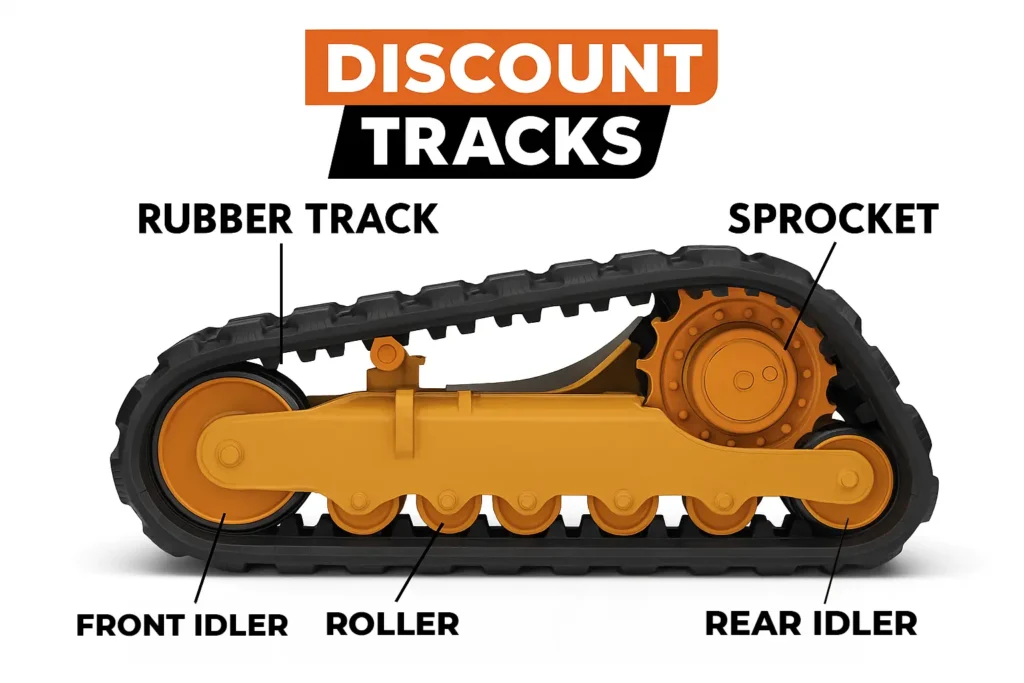
I always look at the rollers together with the track chains, shoes, idlers, and sprockets. I do not treat one roller as an isolated part.
What Does a Bottom Roller Do?
I normally call a bottom roller a track roller. The roller sits underneath the track frame.
The excavator’s weight transfers through the track frame and rollers to the track chain and then to the ground. This means the bottom roller works under a high load for long periods.
The roller also contacts the track links while the machine travels. It needs to rotate smoothly and maintain its correct position.
| Bottom Roller Function | Why It Matters |
|---|---|
| Supports machine weight | Helps maintain machine stability |
| Guides track links | Keeps the track chain moving correctly |
| Transfers load | Reduces unnecessary stress on other parts |
| Handles impact | Helps the machine work on rough ground |
| Rotates continuously | Reduces friction and abnormal wear |
I pay special attention to the roller shell, shaft, bushings, seals, and internal lubrication.
What Does a Top Roller Do?
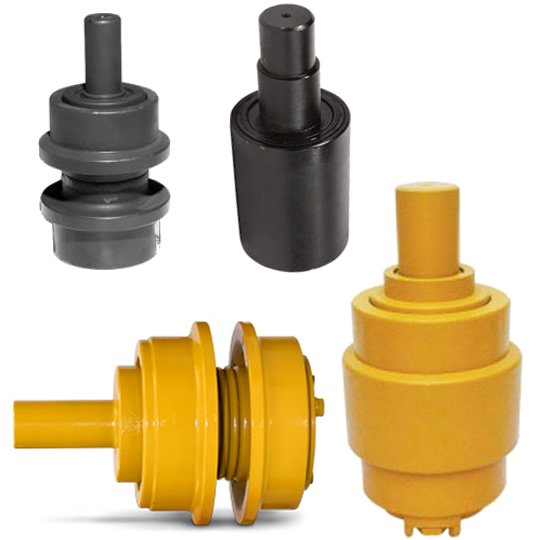
I also call a top roller a carrier roller. It sits above the track frame.
The top roller supports the upper part of the track chain. It helps control track chain movement and reduces excessive sag.
A top roller usually carries less load than a bottom roller. However, it still works continuously when the excavator travels.
I therefore do not consider a top roller a low-priority component. A damaged top roller can affect track movement and create additional wear.
What Happens When Rollers Become Worn?
I normally see several warning signs when rollers become worn.
- The roller surface becomes damaged.
- The roller does not rotate smoothly.
- The machine produces abnormal noise.
- Oil or grease leaks from the seal.
- The track becomes unstable.
- The track chain shows uneven wear.
- The excavator vibrates more than normal.
- The undercarriage needs more frequent repairs.
I do not recommend waiting until the roller completely fails. A failed roller can damage other undercarriage components.
How Do I Choose the Correct Bottom Roller for an Excavator?
I start with the excavator brand and exact model. I then check the original part number and technical dimensions.
I choose a bottom roller by checking the machine model, serial number, part number, roller diameter, width, flange design, shaft dimensions, mounting position, sealing system, material, and working conditions.
A visual match is not enough for me. Two rollers can look similar but have different dimensions or internal designs.
Which Dimensions Do I Check?
I usually ask for several measurements when the original part number is not available.
| Dimension | What I Check |
|---|---|
| Overall length | Total roller and shaft length |
| Roller diameter | Outside running diameter |
| Roller width | Track contact width |
| Flange diameter | Guiding flange size |
| Shaft diameter | Mounting compatibility |
| Mounting dimensions | Track frame installation |
| Bolt pattern | Correct installation |
| Flange spacing | Correct track alignment |
I use these measurements to reduce the risk of supplying the wrong component.
Why Does the Excavator Model Matter?
I never assume that two excavators with similar operating weights use the same roller.
Manufacturers can use different track frame designs. Different production years can also have different undercarriage configurations.
A standard excavator may use one type of roller. A heavy-duty version may use another design.
I therefore prefer to confirm the exact model and serial number before I quote.
What If I Only Have the Old Roller?
I can still use the old roller as a reference.
I normally ask for:
- Excavator brand.
- Excavator model.
- Serial number.
- Original part number.
- Photos of the old roller.
- Key dimensions.
- Quantity required.
- Working conditions.
This information helps me identify the correct replacement.
How Do I Choose the Correct Top Roller?
I use a similar process for top rollers, but I pay more attention to the track frame and upper track layout.
I choose a top roller according to the excavator model, track frame design, roller diameter, roller width, shaft dimensions, mounting position, track chain configuration, and working conditions.
A top roller can look correct but still have an incorrect shaft or mounting dimension.
Why Is Top Roller Design Important?
I see different top roller designs across excavator models.
Some machines use one top roller on each side. Other machines can use different quantities because the track frame length and design are different.
The top roller must support the track chain correctly. It must also rotate smoothly.
If the roller is too small, the track may not run correctly. If the roller is too large, it may interfere with the track system.
I always check the installation position before confirming the part.
What Should I Check Before Ordering?
| Check Point | My Recommendation |
|---|---|
| Machine model | Confirm the exact model |
| Serial number | Provide it when available |
| Part number | Compare with the original |
| Roller diameter | Measure the old part |
| Roller width | Confirm track configuration |
| Shaft size | Check mounting dimensions |
| Mounting holes | Confirm installation |
| Quantity | Confirm rollers per side |
| Application | Identify working conditions |
I also check whether the buyer needs one replacement roller or a complete set.
What Is the Difference Between Bottom Rollers and Top Rollers?
I explain the difference in a simple way. Bottom rollers carry the machine. Top rollers support the upper track.
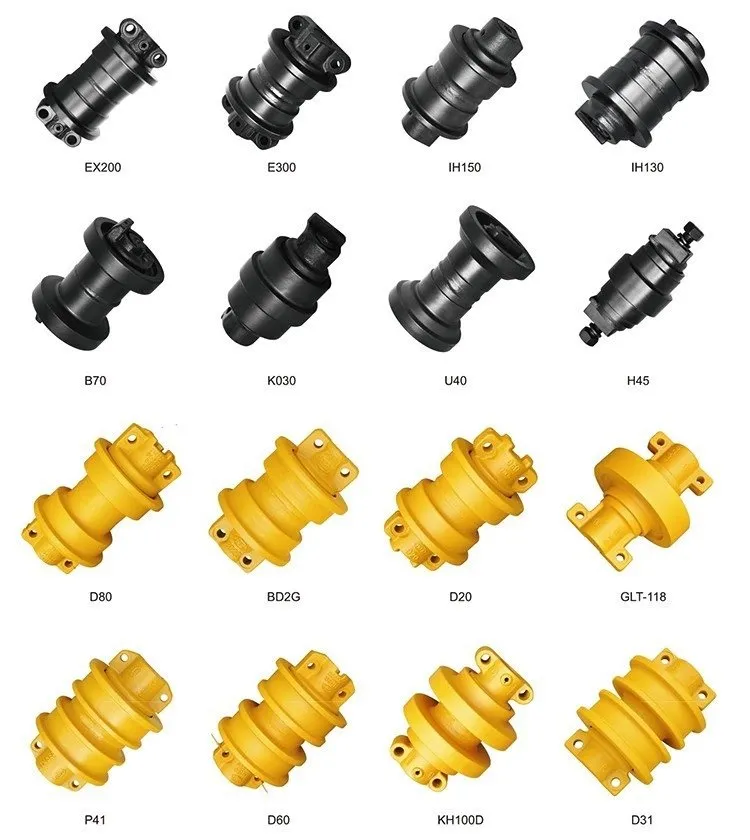
Bottom rollers are installed below the track frame and carry most of the excavator’s weight. Top rollers are installed above the track frame and support the upper track chain. They have different positions, loads, and designs.
Bottom Roller vs. Top Roller
| Feature | Bottom Roller | Top Roller |
|---|---|---|
| Common name | Track roller | Carrier roller |
| Position | Below track frame | Above track frame |
| Main function | Carry machine weight | Support upper track |
| Load | Very high | Lower than bottom roller |
| Ground contact | Supports lower track | Supports upper track |
| Wear | Usually higher | Usually lower |
| Main concern | Load capacity and wear | Alignment and smooth rotation |
I never recommend using one type in place of the other. They perform different jobs.
How Does Material and Heat Treatment Affect Roller Life?
I pay close attention to material and heat treatment because rollers work under repeated pressure, friction, and impact.
I prefer high-strength alloy steel with controlled heat treatment because the roller needs a hard wear surface and a strong internal structure. Good heat treatment can improve wear resistance, load capacity, fatigue resistance, and service life.
I do not judge a roller only by its appearance. The internal structure and heat treatment also affect its performance.
Why Is Surface Hardness Important?
The running surface contacts the track chain continuously.
If the surface is too soft, the roller can wear quickly. If the material is poorly treated, the roller may deform or develop cracks under heavy loads.
I therefore look for a balance between hardness and toughness.
I want the surface to resist wear. I also want the internal material to handle impact.
What Does Good Heat Treatment Give Me?
I expect proper heat treatment to provide:
- Better surface wear resistance.
- Better impact resistance.
- More stable dimensions.
- Better fatigue resistance.
- Longer service life.
- More reliable performance.
I also consider the application. A roller used in a quarry needs to handle different loads from one used on a normal construction site.
How Do Working Conditions Affect Roller Selection?
I never treat all excavator applications as the same.
I select roller specifications according to the working environment because mud, rocks, sand, water, vibration, heavy loads, and long operating hours can change roller wear and service life.
An excavator working in soft soil has different requirements from one working in hard rock.
How Do Different Conditions Affect Rollers?
| Working Condition | Main Risk |
|---|---|
| Mud | Seal contamination and corrosion |
| Sand | Abrasive wear |
| Rock | Impact and surface damage |
| Quarry | Heavy load and severe impact |
| Mining | Long working hours and high load |
| Demolition | Shock loading and vibration |
| General construction | Mixed and moderate wear |
I usually recommend stronger undercarriage components for severe applications.
Why Does Track Tension Matter?
I also check track tension when I see abnormal roller wear.
Excessive track tension can increase friction and load on the undercarriage.
Loose track tension can increase track movement and impact.
I therefore do not blame the roller immediately. I check the complete undercarriage system first.
Should I Replace One Roller or a Complete Set?
I make this decision based on the actual wear condition.
I replace individual rollers when the remaining rollers are still in good condition and the damage is isolated. I consider a complete set when several rollers have similar wear or when the machine needs a major undercarriage repair.
When Does Individual Replacement Make Sense?
I may recommend individual replacement when:
- One roller has failed.
- Other rollers have low wear.
- The undercarriage was recently repaired.
- The customer needs a quick repair.
- The customer wants to control immediate costs.
This option can reduce the initial expense.
When Do I Recommend a Complete Set?
I consider a complete set when most rollers are already heavily worn.
A complete set can provide more consistent track movement. It can also reduce the chance of another roller failing soon after the first repair.
| Situation | My Approach |
|---|---|
| One damaged roller | Replace individually |
| Several worn rollers | Compare total cost |
| Most rollers worn | Consider a complete set |
| New track chain | Check all rollers |
| Mining application | Consider heavy-duty rollers |
| Major rebuild | Check the full undercarriage |
How Can I Improve the Service Life of Excavator Rollers?
I believe installation and maintenance are as important as the roller itself.
I improve roller service life by maintaining correct track tension, cleaning the undercarriage, checking oil leakage, inspecting wear regularly, and replacing damaged components before they affect other parts.
What Maintenance Do I Recommend?
I suggest a simple inspection routine.
Daily Inspection
I check:
- Mud around the rollers.
- Rocks inside the track frame.
- Oil or grease leakage.
- Damaged seals.
- Abnormal noise.
- Uneven roller wear.
- Track tension.
Regular Inspection
I measure the wear of rollers and track components.
I also inspect the track chain, track shoes, idler, and sprocket.
If I see unusual wear, I try to find the cause. I do not simply replace the damaged part without checking the system.
Why Should I Clean the Undercarriage?
I know that dirt can hide problems.
Mud can stay around the roller. Rocks can become trapped between the track components. These materials can increase wear and make inspection difficult.
I recommend cleaning the undercarriage regularly, especially after working in wet or muddy conditions.
Can Aftermarket Rollers Match OEM Performance?
I believe a properly manufactured aftermarket roller can provide reliable performance when the manufacturer controls material, heat treatment, machining, assembly, and inspection.
A quality aftermarket roller should match the required dimensions and performance of the application. I focus on material, heat treatment, sealing, machining accuracy, load capacity, and quality inspection instead of looking at price alone.
What Do I Check in an Aftermarket Roller?
| Quality Factor | What I Look For |
|---|---|
| Material | High-strength alloy steel |
| Heat treatment | Controlled hardness and toughness |
| Machining | Accurate dimensions |
| Sealing | Reliable contamination protection |
| Internal parts | Correct component matching |
| Assembly | Controlled production |
| Inspection | Dimensional quality inspection |
| Packaging | Safe international transportation |
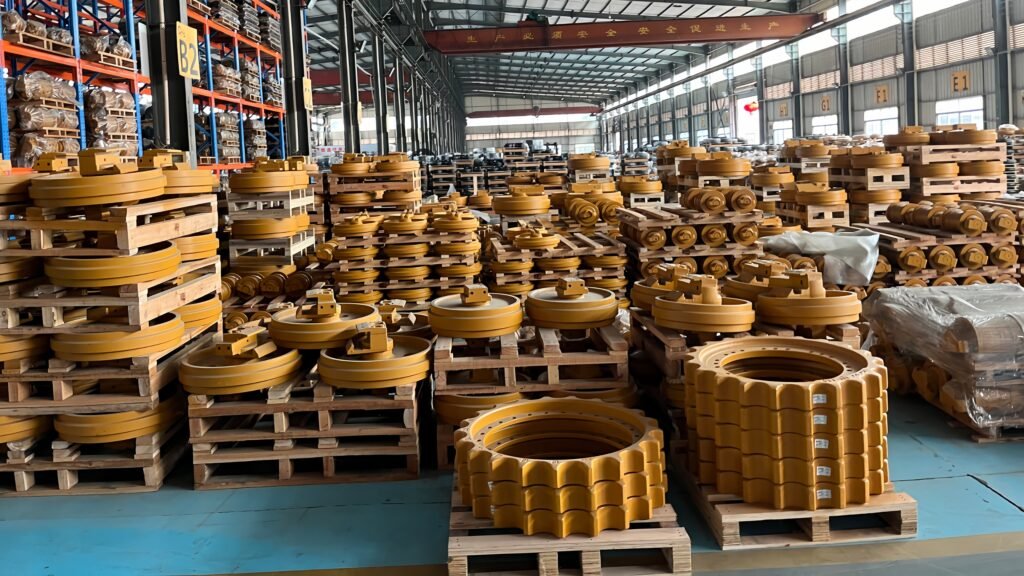
At Hunan Siderwin Construction Machinery Co., Ltd., I provide factory-direct undercarriage parts and technical support.
I also support OEM and ODM requirements when customers need special specifications.
How Do I Balance Price and Service Life?
I do not think the cheapest roller is always the best option.
I compare the purchase price with expected service life.
If an excavator works many hours every month, frequent roller replacement can increase labor costs and downtime.
A higher-quality roller can sometimes reduce the total operating cost even when its initial price is higher.
I therefore look at the complete cost rather than the unit price alone.
How Can I Buy the Right Excavator Rollers From a Factory?
I recommend providing complete machine information before I prepare a quotation.
I can supply excavator bottom rollers and top rollers based on the machine model, part number, dimensions, quantity, working conditions, and required quality level. I can also provide factory-direct pricing, technical support, packaging, and worldwide shipping.
What Information Do I Need for a Quote?
| Information | Example |
|---|---|
| Machine brand | Caterpillar |
| Machine model | 320 |
| Serial number | Machine-specific |
| Part number | Original roller number |
| Roller type | Bottom or top roller |
| Quantity | 4 pcs |
| Application | General excavation |
| Working condition | Rock / soil / mining |
| Destination | Port or city |
| Required quality | OEM equivalent / heavy-duty |
I use this information to reduce quotation mistakes.
What Can I Provide?
At Siderwin, I provide one-stop purchasing solutions for construction machinery wear parts.
I supply:
- Track chains.
- Track link assemblies.
- Track rollers.
- Carrier rollers.
- Track shoes.
- Track bolts and nuts.
- Idlers.
- Sprockets.
- Track adjuster assemblies.
- Recoil springs.
I also supply ground engaging tools, excavator buckets, and foundation drilling tools.
My factory focuses on stable quality, heat treatment, wear resistance, competitive pricing, fast delivery, and professional export service.
I can also support small trial orders. This gives buyers a practical way to check product quality before placing a larger order.
What Should I Consider Before Ordering Bottom Rollers or Top Rollers?
I always recommend checking technical information before focusing only on price.
I consider compatibility, material, heat treatment, wear resistance, service life, warranty, lead time, packaging, shipping, factory strength, technical support, and after-sales service before I order excavator rollers.
I also ask about the machine’s actual working environment.
A roller for general construction may not be the best option for rock excavation. A standard roller may also not be suitable for a heavy mining application.
I can provide technical support when the buyer is unsure about the correct part number or specification.
I can also support small trial orders for customers who want to test the product before a larger purchase.
Conclusion
I choose bottom and top rollers by looking at compatibility, working conditions, material, heat treatment, quality, and expected service life instead of price alone.