Track Shoe Bolts and Nuts: Torque, Grade and Re-Torque for 2026 Buyers
A track shoe bolt costs less than a tank of diesel. Losing one on a 40-tonne excavator costs a shift. Buyers rarely treat the two facts as related: weeks go into comparing link pitch, shoe width and grouser profile, then whatever bolt kit the supplier drops in the same carton is accepted without a second look. This guide covers what to specify, what to torque to, how often to come back with a wrench, and which visible clues tell you a joint is already failing.
Why a two-dollar bolt is the most expensive part on the undercarriage
The undercarriage market is large and unglamorous. QYResearch sized the global crawler undercarriage parts market at USD 6.79 billion, and market analysts consistently identify track links, track shoes and track rollers as the highest-value and most frequently replaced items in that basket (source: QYResearch undercarriage parts report, 2026; Market Publishers, Global Excavator Chassis Parts 2026–2032). Demand is not slowing: in its November 2026 investor note, a Chinese wear-parts manufacturer argued that high copper and gold prices, plus a 2008–2012 mine capex peak now reaching the end of a 15-year equipment life, keep aftermarket wear-part demand durable for years (source: Shanghai Securities News, 2 November 2026). Older machines, working harder, are exactly the machines whose shoe bolts get re-torqued late.
The failure mechanism is progressive, not sudden. Vibration produces micro-slip at the shoe-to-link interface, clamp load decays, the joint opens by fractions of a millimetre, and a fatigue crack starts at the thread root — in three hard-rock failure cases analysed by one fastener maker, vibration-induced loosening was the initiating event in all three (source: Digtech Machinery track bolt analysis, 2026). What makes this worth a paragraph in a purchasing file is the ratio between part cost and consequence. A thrown track from loose hardware means four to eight hours of recovery and repair, USD 600–1,200 in lost production at USD 150 per hour, a service truck at roughly USD 200 per hour, and USD 500–2,000 in replacement bolts, shoes or an idler — USD 3,000–5,000 for a single incident, or USD 60,000–100,000 a year across a ten-machine fleet (source: Juli Machinery undercarriage fastening cost analysis, 2026). The same source reports a Ghana gold mine cutting bolt-related downtime by 70% in six months after a formal re-torque programme, and an Australian coal operation reducing its undercarriage maintenance budget by 18%.
Grade 8.8, 10.9 or 12.9: what the head stamp actually buys
Three grades cover almost every track shoe bolt in service. The numbers are minimum tensile and yield strength, not marketing tiers: grade 8.8 is 800 MPa tensile and 640 MPa yield, grade 10.9 is 1,000 and 900 MPa, and grade 12.9 is 1,200 and 1,080 MPa (source: Juli Machinery bolt grade reference, 2026). A 12.9 bolt hardened to HRC 39–44 will carry the highest clamp load — and is also the most notch-sensitive and the most vulnerable to hydrogen embrittlement if it is zinc plated without proper baking (source: GFM Parts track bolt manufacturing guide, 2026).
Most OEMs settle on grade 10.9 for shoe bolts because it balances strength with toughness under impact. That is the grade to default to unless the machine manual says otherwise. The trap is a buyer who specifies 12.9 “to be safe” and then keeps the old torque value: an Australian mining contractor sheared M24 grade 10.9 shoe bolts repeatedly because they were torqued to 1,200 Nm on the assumption that more is better. A calibrated procedure at 950 Nm dry tripled bolt life (source: Juli Machinery, 2026).
The torque table — and why two suppliers quote two different numbers
Track bolts are almost always fine-thread (M20×1.5, M24×1.5, M27×1.5) because fine pitch gives more clamp load per unit of torque and resists loosening better than coarse thread. The table below is a workshop reference for dry, clean threads; where a machine manual gives its own figure, the manual wins.
| Bolt size × pitch | Grade 10.9, dry (Nm) | Grade 12.9, dry (Nm) | Grade 12.9, lubricated (Nm) | Typical machine class |
|---|---|---|---|---|
| M16 × 1.5 | 270–300 | 370 ± 20 | 275–300 | Mini excavators, 1–5 t |
| M20 × 1.5 | 520–570 | 786 ± 40 | 590–640 | 6–13 t excavators |
| M22 × 1.5 | — | 1,030 ± 40 | 770–820 | 13–20 t excavators |
| M24 × 1.5 | 900–1,000 | 1,270 ± 60 | 950–1,020 | 20–35 t excavators, dozers |
| M27 × 1.5 | — | 1,860 ± 90 | 1,395–1,490 | 35–50 t excavators |
| M30 × 2.0 | 1,750–1,950 | 2,600 ± 130 | 1,950–2,080 | 50 t and above, large dozers |
Values assembled from published undercarriage torque charts and bolt-grade references (source: West-Trak track bolt torque settings, class 12.9, fine thread; Juli Machinery 2026 bolt torque guide, dry threads, friction coefficient 0.14). Lubricated figures assume a 20–25% reduction to reach the same clamp load.
Two things explain most of the disagreement between suppliers. The first is the friction assumption. Only 10–20% of the torque you apply actually becomes clamp load; 40–50% is eaten by thread friction and another 40–50% by friction under the bearing face. A dry, as-received bolt can sit at a coefficient of 0.18–0.22 while a bolt correctly coated with molybdenum disulphide sits at 0.10–0.14 — the same wrench setting then produces clamp loads that differ by up to 40% (source: Digtech Machinery, 2026). A supplier who quotes a torque figure without saying which friction condition it assumes has given you half an answer.
The second is method. A single final torque is only one way to seat a joint; the alternative is a pre-torque plus a fixed part-turn, typically one third of a turn, which is far less sensitive to friction and is what many OEM manuals specify for the largest sizes. Case, for example, publishes 1,236–1,510 Nm for its CX490D shoe bolts, checked every 250 hours after an initial check at 50 hours (source: Case CX490D operator manual). Those are not round numbers, and they are not wrong either — they belong to a specific joint, bolt and friction condition.
The re-torque schedule that prevents most failures
Re-torquing is not a workshop ritual; it is the only scheduled action that catches clamp-load decay while the joint is still serviceable. The intervals that appear consistently across OEM manuals and undercarriage service literature are:
- First check at 50–100 hours after installation, because high spots on threads and mating faces flatten and preload drops. Skipping this single step is the most common cause of loosening reported in African mining fleets (source: Juli Machinery, 2026).
- Every 250 hours thereafter, or at the same interval as link and roller inspection (source: Case CX490D operator manual; Kinton Parts bolt failure guide, 2026).
- Every 10 hours for the first 60 hours on a brand-new chain, then at least every 250 hours — and every 100 hours where the chain runs liquid-lubricated pins (source: undercarriage maintenance service guidance, 2026).
- After any track work: shoe change, link section replacement, master pin refit, or tension adjustment.
Method matters as much as interval. Use a calibrated torque wrench or a torque multiplier with ±3% accuracy or better, tighten in a cross pattern rather than around the chain, and stop when the value is reached — over-tightening pushes the shank past yield, the bolt stretches, preload falls away and the failure you were preventing arrives on schedule. Impact guns are for removal only; a rattle gun cannot tell you what preload it left behind (source: GFM Parts, 2026; Juli Machinery, 2026).
Five signatures that tell you a joint is already failing
Walk-around inspection takes five minutes and finds most of these before they become a recovery job:
- A polished or fretted ring under the bolt head or nut. Metal-to-metal movement has already started. Re-torque will not fix it; replace the bolt and inspect the seat.
- A fresh rust trail running down from the joint. Water is getting in and the coating has failed — the first sign of a loose fastener on a machine that works wet.
- An elongated or oval bolt hole in the shoe or the link. This is the quiet chain killer: the plate no longer sits square, load shifts onto the link body, and the chain stretches ahead of schedule. Repair washers are a patch; the shoe belongs in the scrap pile (source: Origin Machinery track shoe failure analysis, 2026).
- A hairline crack at the grouser root or around a bolt boss. Both are stress concentrators by design. A soft or under-torqued bolt lets the plate shift a fraction of a millimetre per cycle and the hardened plate tears at the edge of the hole.
- A dished or reverse-cambered plate. The shoe is flexing as it rolls over the rollers — usually wrong width or profile for the ground, or a chain that is over-tensioned. It work-hardens, then it cracks.
Reuse, coating and cold-weather installation
Bolts that have been torqued to yield are single-use items, and even conventional bolts accumulate hidden stretch and corrosion pitting. Replace shoe bolts at every second or third shoe change, or immediately on any sign of thread deformation — a bolt kit is a rounding error against a thrown track. Never mix grades on one chain: a 12.9 bolt beside a 10.9 bolt will take more than its share of the load and fail first.
Coating choice is a procurement decision, not a detail. Zinc plating on 10.9 and 12.9 fasteners carries a hydrogen embrittlement risk unless the parts are baked correctly; zinc-flake coatings such as Geomet or Dacromet are the safer specification for undercarriage hardware and hold up better against salt and slurry. On the installation side, thread locker behaviour is temperature-dependent: assembled in an unheated shed at −15 °C the compound may never cure properly, while at 45 °C it can set before the final torque pass. Choose a formula rated for the site temperature, and pick either a locker or an anti-seize — never both, and never undocumented.
What to put in the RFQ
Most bolt complaints trace back to a one-line enquiry. Put these in writing and a supplier has nowhere to hide:
- Grade and marking: 10.9 or 12.9, head-stamped, with mill certificate and proof-load report.
- Thread: fine pitch specified by size (M20×1.5 rather than “M20”), plus length under head and thread length.
- Matched nuts and washers: a grade 10 nut for a 10.9 bolt is not a matched pair — specify the nut class and the washer hardness.
- Coating: zinc-flake or equivalent, with salt-spray hours stated.
- Torque recommendation in writing, including the friction assumption it is based on (dry, oiled, MoS2).
- Kit logic: bolts per shoe, plus the master-pin and split-link hardware if the chain uses them.
Expect a minimum order around 500 pieces per diameter and length, 15–25 days for standard sizes, 30–45 days for specials, and 25–40 days of sea freight on top — which is why a re-order point built on 250-hour inspection intervals beats ordering when the kit runs out (source: track shoe bolt wholesale terms, 2026).
Where the hardware comes from
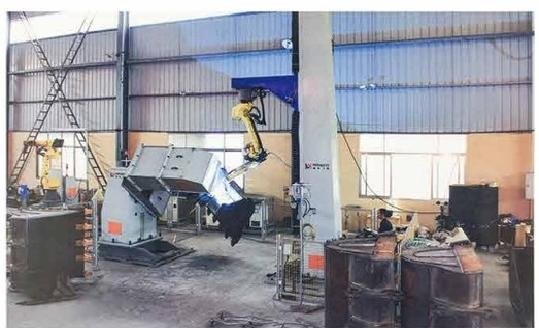
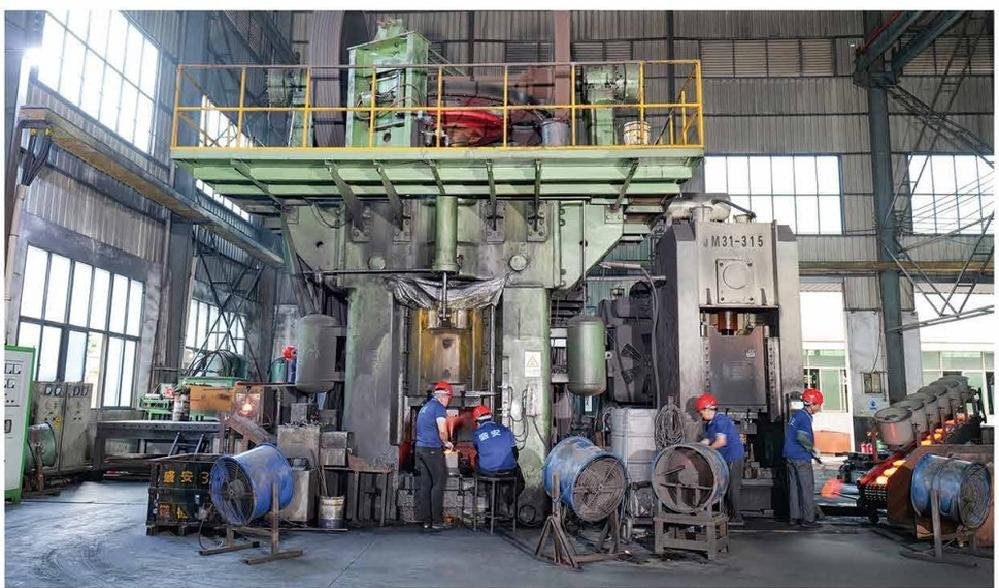
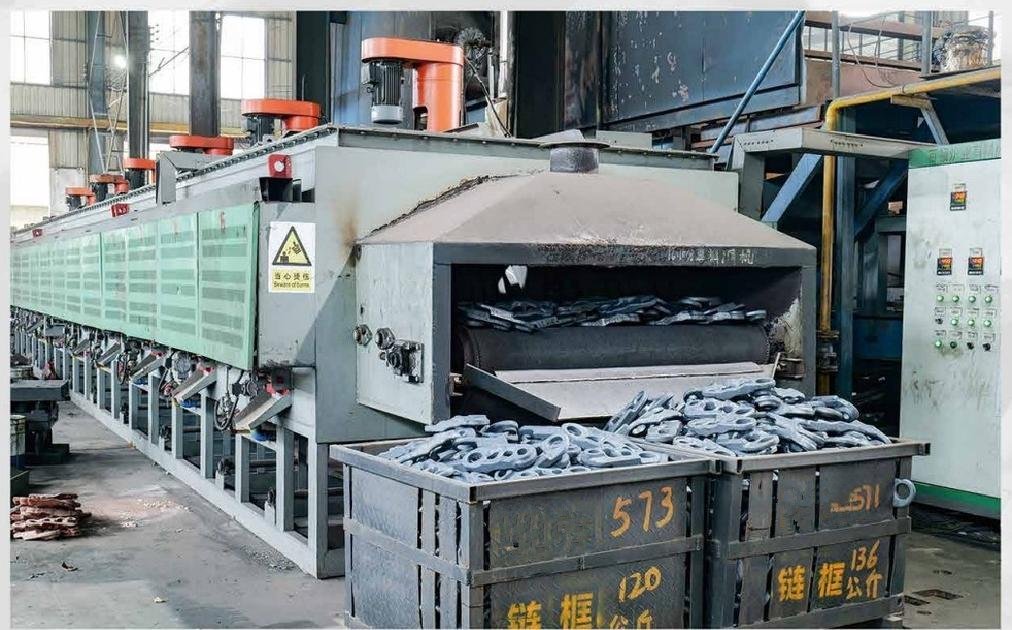
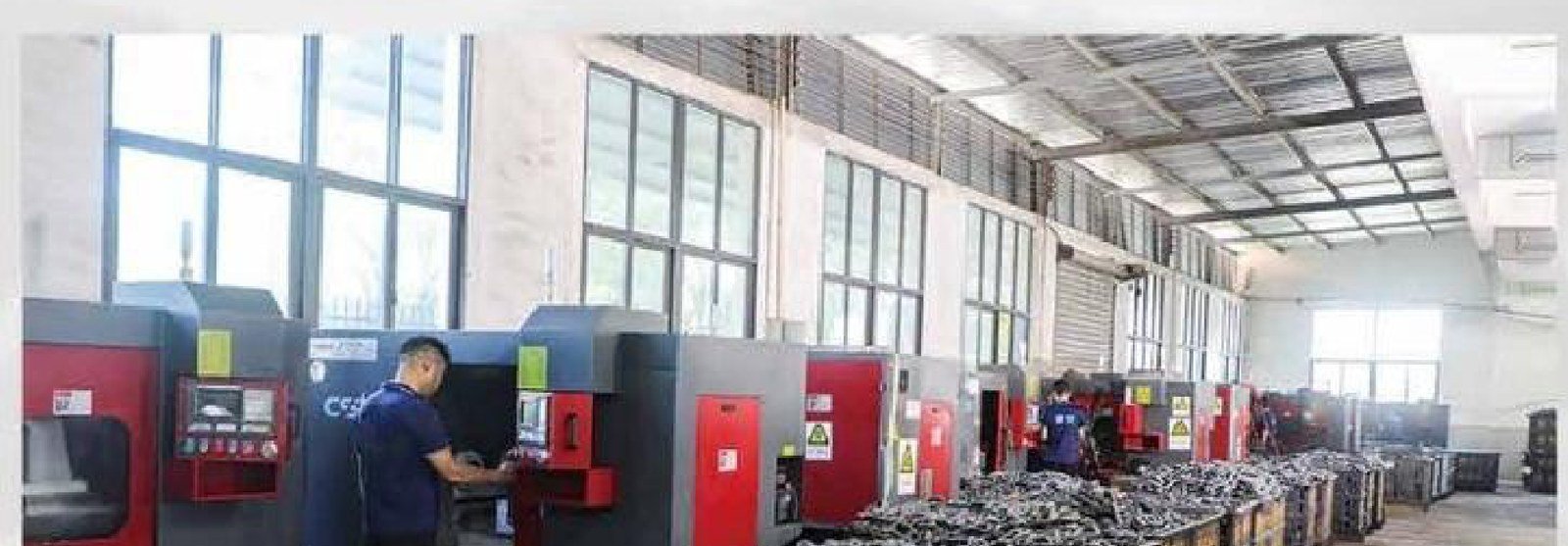
Hunan Siderwin Construction Machinery manufactures undercarriage, GET and piling tooling at an 80,000 m² plant in Liuyang: laser cutting, robotic welding, a 4,000-tonne forging line, and heat treatment backed by in-house impact, tensile, hardness and metallographic testing. Track shoes, links, rollers, idlers and sprockets are supplied to OEM programmes including SANY, Sunward and Zoomlion, and exported to more than 20 countries — with bolt kits matched to the shoe and link sets they ship with, so the fasteners in the carton are the ones the joint was designed around.
Send the machine model, link pitch and shoe part number to info@siderwin.com, or message +86 181 4265 7536 on WhatsApp for a torque sheet and quotation within one working day. Full undercarriage and GET range at www.siderwin.com.