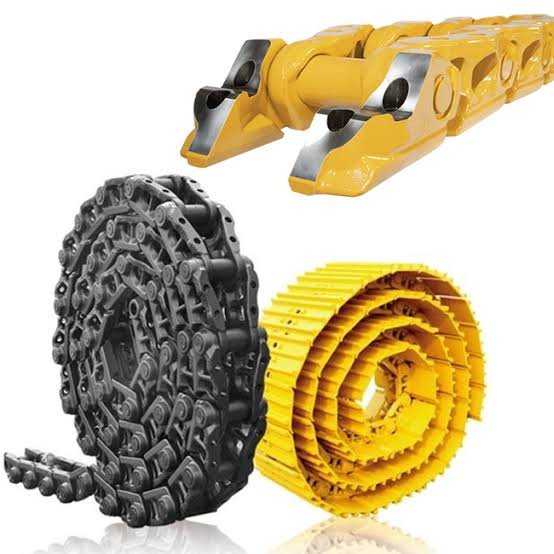
Heavy equipment often fails because of undercarriage wear. Many buyers only look at price. That mistake can lead to expensive downtime and frequent replacements.
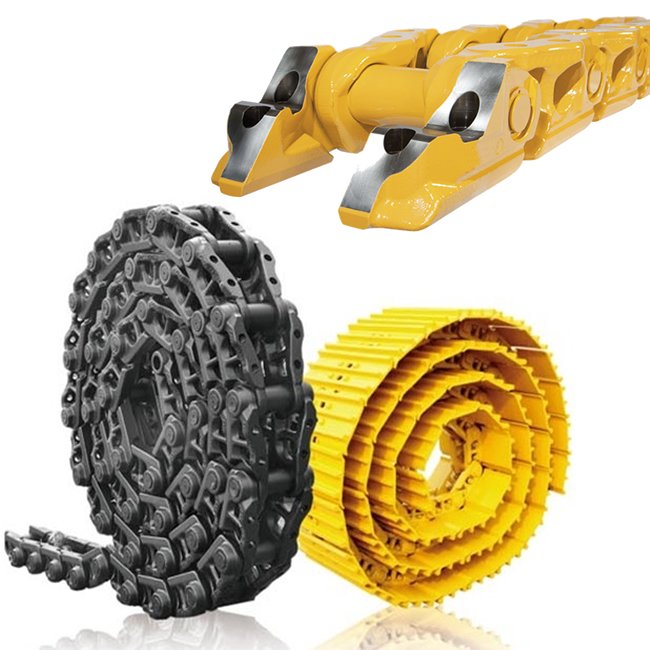
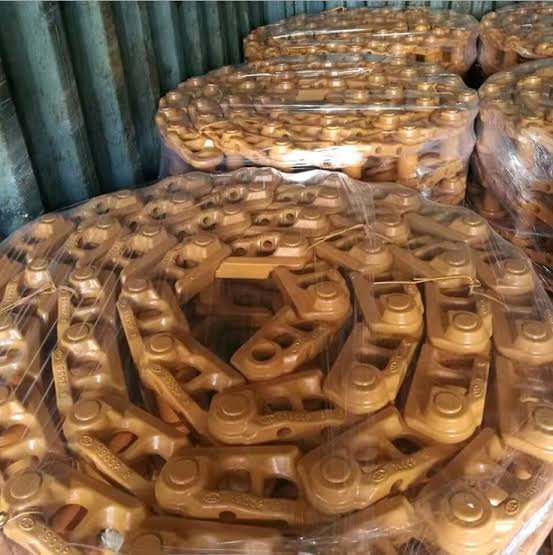
A lubricated track chain is a sealed track chain filled with lubricant between the pin and bushing. It reduces internal wear, extends service life, lowers maintenance costs, and improves machine performance. High-quality track chains are usually made from heat-treated alloy steel with hardened pins, bushings, and forged links.
I still remember visiting a customer’s job site where two excavators worked side by side. One machine had a lubricated track chain, while the other used a standard dry chain. After months of work, the difference in wear was easy to see. That experience reminded me that choosing the right undercarriage is just as important as choosing the machine itself.
What Is a Lubricated Track Chain?
A lubricated track chain may look similar to a standard track chain. The difference is inside the chain.
A lubricated track chain uses seals to keep lubricant between the pin and bushing. This oil reduces friction, slows wear, and helps the chain last much longer than a dry track chain.
How does a lubricated track chain work?
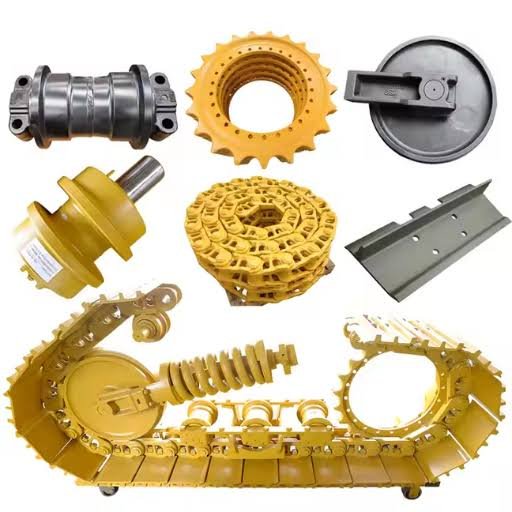
Every track chain consists of links, pins, bushings, and seals.
During assembly, lubricant is injected into the space between the pin and the bushing. High-quality seals lock the oil inside and keep dirt, water, and mud outside.
As the machine moves, the pin rotates inside the lubricated bushing. Because oil separates the metal surfaces, friction becomes much lower.
| Component | Function |
|---|---|
| Track Link | Connects the chain |
| Pin | Joins adjacent links |
| Bushing | Contacts the sprocket |
| Seal | Prevents oil leakage |
| Lubricant | Reduces friction and wear |
Why is lubrication so important?
Metal rubbing against metal creates heat.
Heat increases wear.
Wear enlarges the clearance between the pin and bushing.
Once that clearance becomes too large, the track chain reaches its wear limit.
Lubrication slows every step of this process.
What happens if lubrication is lost?
A damaged seal allows oil to escape.
Dust and water enter the joint.
Internal wear increases quickly.
The chain begins to stretch faster.
Noise also becomes louder.
Many people think the chain is still usable because the outside looks normal. In fact, most wear happens inside the sealed joint.
What Materials Are Used to Manufacture a Lubricated Track Chain?
The material determines the strength of the chain. Good design alone is not enough.
Most premium lubricated track chains use forged boron alloy steel or chromium-molybdenum alloy steel. Heat treatment gives each component high strength, excellent toughness, and long wear life.
Common materials for each component
Different parts require different properties.
| Component | Typical Material | Main Requirement |
|---|---|---|
| Track Link | Boron Alloy Steel | High strength |
| Pin | Chromium Alloy Steel | High hardness |
| Bushing | Chromium-Molybdenum Steel | Wear resistance |
| Seal | High-grade Rubber | Oil retention |
| Lubricant | Heavy-duty Gear Oil | Long-term lubrication |
Why is forging better than casting?
I always recommend forged track links.
Forging aligns the metal grain structure.
The material becomes stronger.
Impact resistance improves.
Fatigue life becomes longer.
Casting may reduce production cost, but forged links usually survive much longer under heavy loads.
Why is heat treatment necessary?
Heat treatment changes the internal structure of steel.
The outside becomes harder.
The inside remains tough.
This combination helps the chain resist cracking while maintaining excellent wear resistance.
Typical heat treatment includes:
- Quenching
- Tempering
- Induction hardening
- Controlled cooling
Without proper heat treatment, even expensive alloy steel cannot achieve its expected performance.
What Is the Difference Between a Lubricated Track Chain and a Dry Track Chain?
Many buyers ask whether lubricated chains are worth the extra cost.
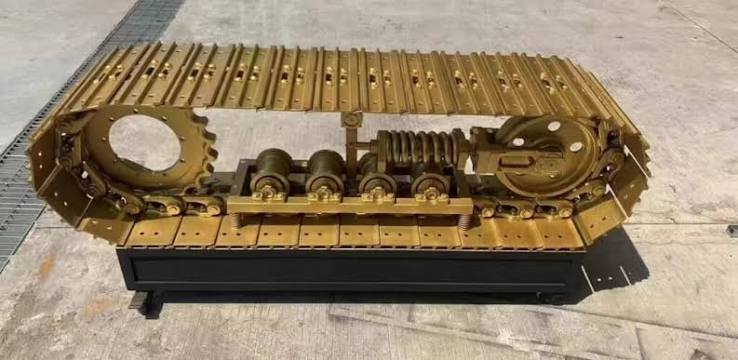
Lubricated track chains cost more initially, but they usually provide longer service life, lower maintenance costs, and reduced downtime compared with dry track chains.
Comparison table
| Feature | Lubricated Track Chain | Dry Track Chain |
|---|---|---|
| Internal Oil | Yes | No |
| Seal System | Yes | No |
| Wear Rate | Lower | Higher |
| Noise | Lower | Higher |
| Service Life | Longer | Shorter |
| Maintenance | Less Frequent | More Frequent |
| Initial Cost | Higher | Lower |
When should I choose a lubricated track chain?
Lubricated chains work well for:
- Mining
- Quarry operations
- Long working hours
- Heavy-duty excavation
- Bulldozer applications
Dry chains may still be suitable for machines with light workloads or short operating periods.
What Factors Affect the Service Life of a Lubricated Track Chain?
Not every lubricated chain lasts the same number of hours.
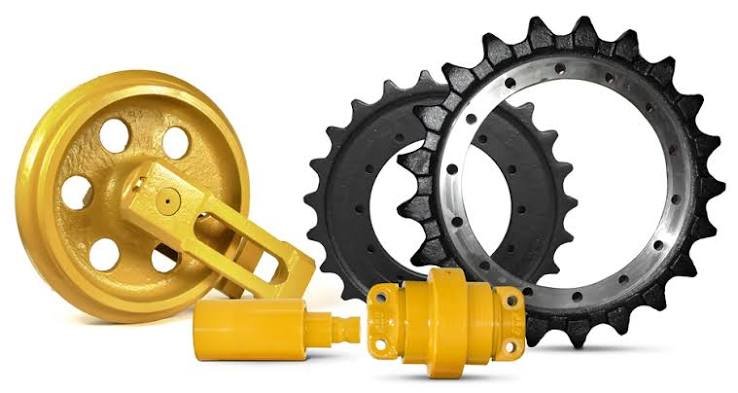
Material quality, heat treatment, sealing performance, operating conditions, maintenance, and machine operation all affect track chain service life.
Material quality
Cheap steel wears faster.
Premium alloy steel maintains hardness much longer.
Seal quality
A strong seal keeps oil inside.
A poor seal fails early.
Once oil leaks, wear increases rapidly.
Machine operating conditions
Rocky ground creates heavy impact.
Sand acts like abrasive paper.
Mud increases resistance.
Steep slopes increase chain tension.
Operator habits
Good operators reduce sudden turns.
They avoid excessive spinning.
They keep proper track tension.
Small operating habits can greatly affect undercarriage life.
Maintenance schedule
Even sealed chains need regular inspection.
I always recommend checking:
| Inspection Item | Frequency |
|---|---|
| Track Tension | Daily |
| Oil Leakage | Weekly |
| Seal Damage | Weekly |
| Sprocket Wear | Monthly |
| Roller Wear | Monthly |
How Can I Identify a High-Quality Lubricated Track Chain?
Many track chains look almost identical.
Quality differences often appear only after months of use.
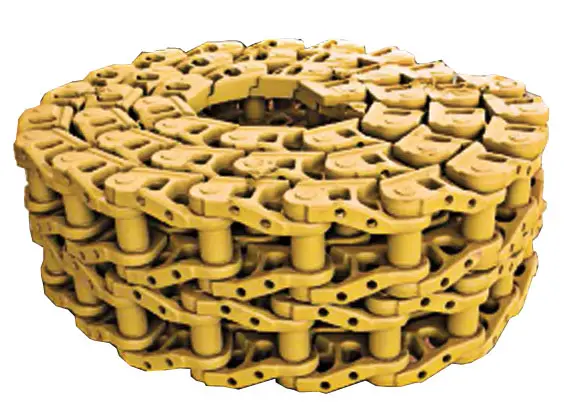
A premium lubricated track chain should have forged links, precision machining, reliable seals, deep heat treatment, consistent hardness, and strict quality inspection before shipment.
Check the steel quality
Ask the supplier about:
- Steel grade
- Hardness
- Heat treatment
- Material certificates
Professional manufacturers usually provide this information.
Look at machining accuracy
Pins and bushings should fit precisely.
Poor machining creates uneven loading.
Uneven loading increases wear.
Evaluate the seal system
Good seals remain flexible.
They resist heat.
They resist oil.
They keep dirt outside.
Ask about factory testing
Reliable manufacturers normally inspect:
| Inspection | Purpose |
|---|---|
| Hardness Test | Verify heat treatment |
| Dimensional Inspection | Ensure assembly accuracy |
| Metallographic Analysis | Check steel structure |
| Assembly Inspection | Confirm proper sealing |
| Final Quality Inspection | Verify overall performance |
Why Do Professional Buyers Choose Factory-Direct Suppliers?
Many buyers focus only on unit price.
The total purchasing cost is much more important.
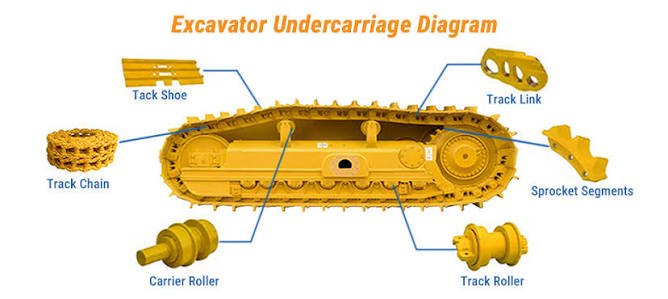
Factory-direct suppliers usually offer better quality control, faster communication, stable production, OEM customization, technical support, and competitive pricing compared with trading-only companies.
Better quality control
Manufacturers inspect products throughout production.
Problems can be corrected immediately.
Faster customization
OEM drawings can be reviewed quickly.
Production schedules are easier to control.
Stable delivery
Professional factories maintain production plans.
This helps reduce delivery delays.
Technical support
Experienced engineers can recommend suitable materials, heat treatment methods, and undercarriage solutions for different working conditions.
From my own experience, long-term cooperation becomes much easier when the supplier understands both manufacturing and application instead of simply selling products.
Why Do I Focus on Heat Treatment Instead of Only Steel Grade?
Many people ask whether alloy steel alone guarantees a long service life.
The answer is no.
Heat treatment is just as important as the steel itself. A premium steel without proper hardening may perform worse than a well-treated standard alloy steel.
Steel selection and heat treatment always work together.
A professional manufacturer controls both.
That is why I pay close attention to every production step, from raw material selection to final inspection.
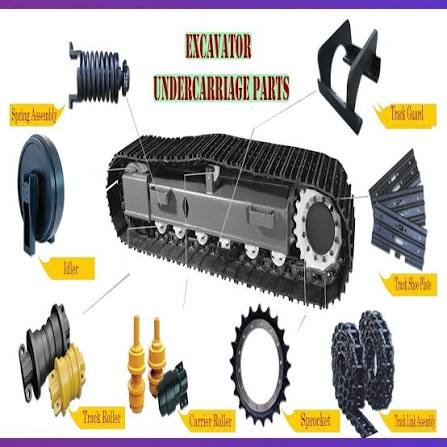
At Hunan Siderwin Construction Machinery Co., Ltd., we manufacture lubricated track chains, track link assemblies, rollers, idlers, sprockets, track adjusters, bucket teeth, excavator buckets, and many other construction machinery wear parts. We focus on factory-direct production, strict quality inspection, advanced heat treatment, OEM manufacturing, and one-stop purchasing solutions for dealers, contractors, mining companies, and equipment distributors worldwide.
Conclusion
A lubricated track chain combines quality materials, proper heat treatment, reliable sealing, and precision manufacturing to deliver longer service life, lower maintenance costs, and better value throughout the machine’s working life.