Export Packaging and Certification for Wear Parts
Published: November 9, 2026 | Hunan Siderwin Construction Machinery Co., Ltd
A shipment of wear parts can leave a factory in perfect condition, be handled correctly by three carriers, and still be commercially unusable when it arrives. The failure is rarely the parts themselves. It is corrosion from condensation that nobody budgeted for, a wooden crate without an IPPC mark held at the port, or a packing list that describes a different configuration from the one in the container. None of those are visible at the loading gate, and all of them are decided in the weeks before the container is closed.
Wear parts make this harder than most machinery. Track chains, rollers, sprockets, bucket teeth and adapters are heavy, dense, machined or forged metal with a large proportion of exposed surface area. A complete 20-ton undercarriage set can run several hundred kilograms of bare steel per pallet with nothing to protect it. Corrosion protection, blocking and bracing, moisture control and documentation are not finishing touches on a wear parts shipment — they are part of the product.
Two Separate Compliance Questions, Often Confused
The most common structural error in export documentation is treating certification and packaging as one requirement. They are independent, and a shipment can pass one while failing the other.
Product compliance follows the destination country’s law: machinery to the EU requires CE marking under the EU Machinery Regulation, machinery to the United Kingdom requires UKCA or the applicable local rules, Mexico requires NOM standards where applicable, and Brazil and Chile require their own local compliance. CE marking is not automatically valid for the United States, Canada, Australia, New Zealand, Mexico, Brazil, Chile or Peru — a CE certificate does not substitute for local market entry requirements in any of those markets (source: STU Supply Chain, machinery export and ISPM-15 checklist).
Packaging compliance is a phytosanitary matter. Solid wood packaging moving internationally must be heat treated or fumigated to ISPM 15 and carry a visible IPPC mark. Without it, the consignment can be treated, destroyed or returned at the destination port. Australia and New Zealand run routine in-port inspections and require strict Import Health Standards for wooden packaging. Mexico requires NIMF-15 treatment with visible IPPC marks for ports such as Manzanillo and Veracruz; Brazil requires NIMF-15 treatment for incoming wooden crates, with missing marks resulting in cargo hold or return at Santos and Paranaguá; Chile’s SAG authority requires valid NIMF-15 stamps on crates, frames, pallets and dunnage, and cargo with bark, live pests or missing marks triggers official intervention at San Antonio and Valparaíso; and Peru requires pre-verification of phytosanitary compliance for shipments to Callao and Chancay (source: STU Supply Chain).
ISPM 15 Is Not Optional for a Wear Parts Shipment
Solid wooden crates, pallets and dunnage used for any international shipment must carry a valid IPPC treatment mark. This is the single most common cause of port detention for Chinese machinery exporters, and it is entirely avoidable at the packing stage.
Two practical points catch new exporters. First, the treatment mark must be applied by a licensed provider and must be legible — a stamped or branded mark, not a handwritten one. Second, over-engineering the crate is a real cost: extra-thick solid wood adds gross weight, consumes container volume, raises freight cost and makes loading harder. Balance the protection against weight and dimension efficiency rather than maximising sturdiness (source: STU Supply Chain).
And wooden crates are not always the right answer. Nude loading, steel frames, a steel base with a waterproof membrane, wooden pallets or partial wooden frames are all legitimate options, and the choice depends on part weight, dimensions, precision, transport mode and what the buyer has asked for. For wear parts specifically, the parts most at risk in a container are the machined surfaces — the bore faces of rollers and idlers, the tooth flanks of bucket teeth, the bolt holes of cutting edges and the seal faces of sprocket segments. Those are the surfaces that get destroyed by abrasion and salt spray, and they are also the surfaces a buyer will inspect first on arrival.
Preservation for a Two to Three Week Voyage
Heavy goods often sit at sea for two or three weeks after leaving the factory, and the failure mode is rust and impact damage rather than theft. The common practice for corrosion-prone machined steel is a layered approach: anti-rust oil or VCI film on the inner layer, anti-rust paper and desiccant inside, then a solid wooden box or steel frame box on the outside, with bolts and timber fixing the parts in two directions so nothing can move during transit (source: Hangzhou Weigao Transmission export packaging guidance, 2026; Zhongtai Supply Chain export packaging checklist).
Several specifics are worth stating because they are the difference between a controlled process and a habit:
- Clean and dry before you preserve. Dirt and trapped moisture hide corrosion and make later inspection difficult.
- Size the desiccant to the volume. A common rule is roughly one tenth of the packing volume in silica gel — about 100 g per cubic metre — rather than a handful thrown in at the end.
- Plan for condensation, not only for water entry. On long or humid routes the packaging plan has to address moisture forming inside the box, which is what barrier materials, desiccants and container moisture control are for.
- Keep preservation materials away from brakes, tyres, controls, labels and electrical contacts, and never let them contaminate a sealing surface.
- Cap or wrap hydraulic and fuel connections after confirming the carrier’s and destination’s fluid-handling requirements, and seal openings against dust and water without blocking vents that must stay functional.
- Protect the detail that is hardest to replace. For customised parts with a special shaft extension or flange, fit a separate sheath over the keyway and mating face; for vibration-sensitive items, add vibration-absorbing pads and impact indicator labels inside the box so the transport history can be judged on arrival (source: Hangzhou Weigao Transmission).
Marking the Crate So the Buyer Can Check It
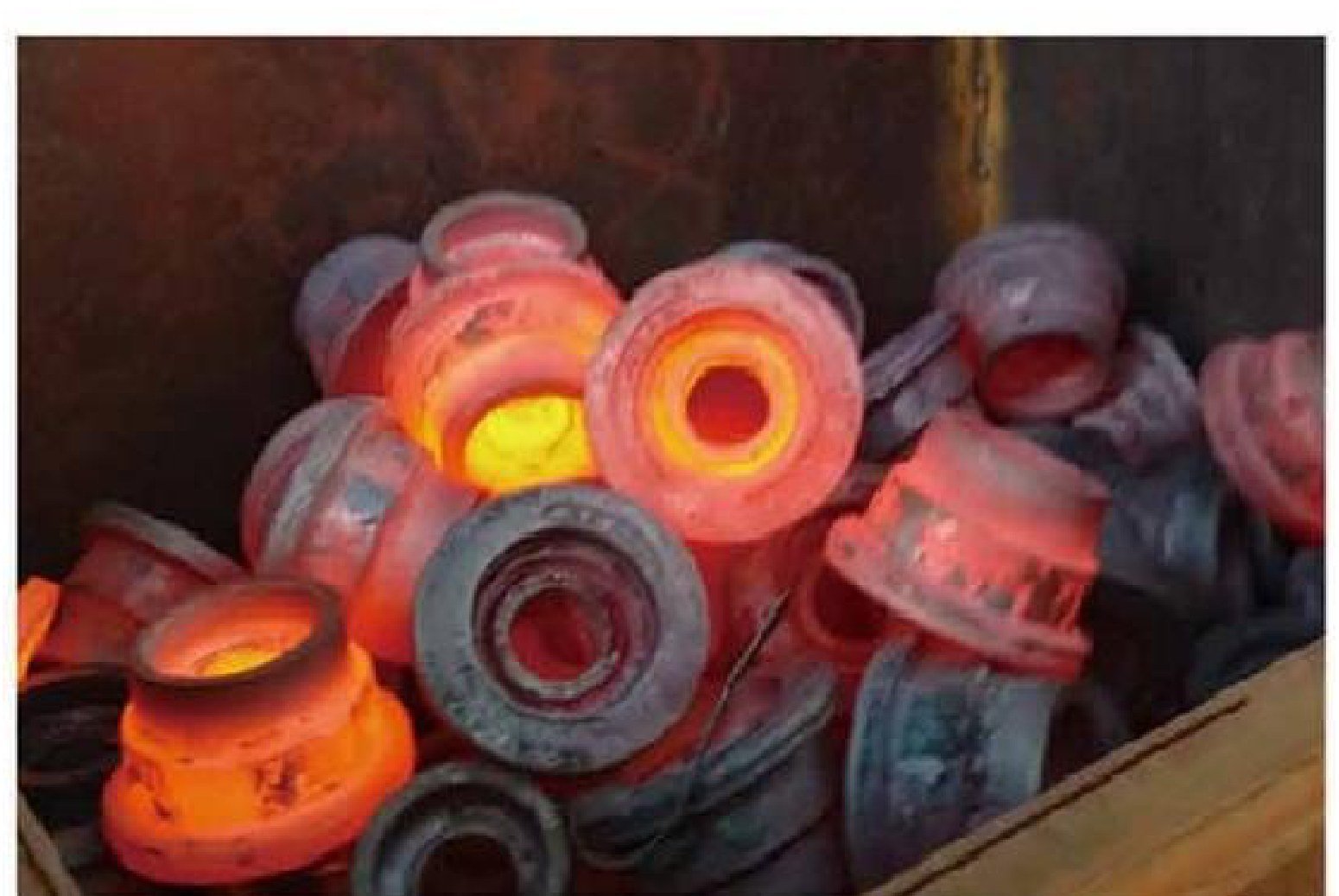
Shipping marks are a small detail that buyers rely on heavily, because they are how a receiving team knows what they are supposed to be looking at when the container is opened. A functional marking on a wear parts crate carries at minimum the destination port, the product name, the specification, gross weight, dimensions, and the “up” and “moisture-proof” indicators. Part numbers and quantities should be itemised against the packing list so a discrepancy shows up at the door rather than three weeks later (source: Hangzhou Weigao Transmission; Zhongtai Supply Chain).
For a mixed undercarriage or GET consignment, itemising by machine model is worth the extra work. A crate containing rollers for two different excavator models, each labelled only “track roller”, creates an inspection task at the destination that nobody budgeted for — and mixed crates are where the “the packing list does not match the container” disputes start.
The Documents That Have to Agree With Each Other
Document inconsistency is the failure that ends up in a claim rather than a complaint. The rule is simple and it is enforced at inspection: the invoice, the packing list, the bill of lading and the customs declaration must describe the same shipment. Under-quoted prices on the paperwork are treated as a high-risk item during inspection rather than a saving (source: Hangzhou Weigao Transmission).
For wear parts the supporting set is specific:
| Document | What it has to show | Common gap |
|---|---|---|
| Packing list | Itemised part numbers, quantities, HS codes, net and gross weight, dimensions per package | Listed by description only, no part numbers |
| Material and mechanical test report | Chemical composition, hardness, impact values, heat number traceability per batch | Generic certificate that cannot be tied to the shipped batch |
| Certificate of origin | FORM E for ASEAN markets, FORM A under GSP — this directly changes the buyer’s tariff cost | Not requested, so it cannot be issued after production |
| Wood packaging certificate | Valid IPPC mark, treatment provider and treatment reference | Mark illegible, or packaging changed after treatment |
| Installation and handling information | Torque figures, lubrication points, assembly sequence | Left out because it is “only for the workshop” |
| Photo and seal record | Container condition before loading, blocking and bracing, seal number, closed-door photographs | No evidence that the shipment was inspected before release |
The material test report is where wear parts differ most from other machinery shipments. A buyer who orders forged bucket teeth has bought a hardness band and a process, not a shape. The certificate has to tie back to the specific heat and batch in the container, which is why in-house heat treatment and a physico-chemical laboratory with hardness, impact and metallographic testing is a commercial asset rather than a technical detail.
Blocking, Bracing and Container Loading
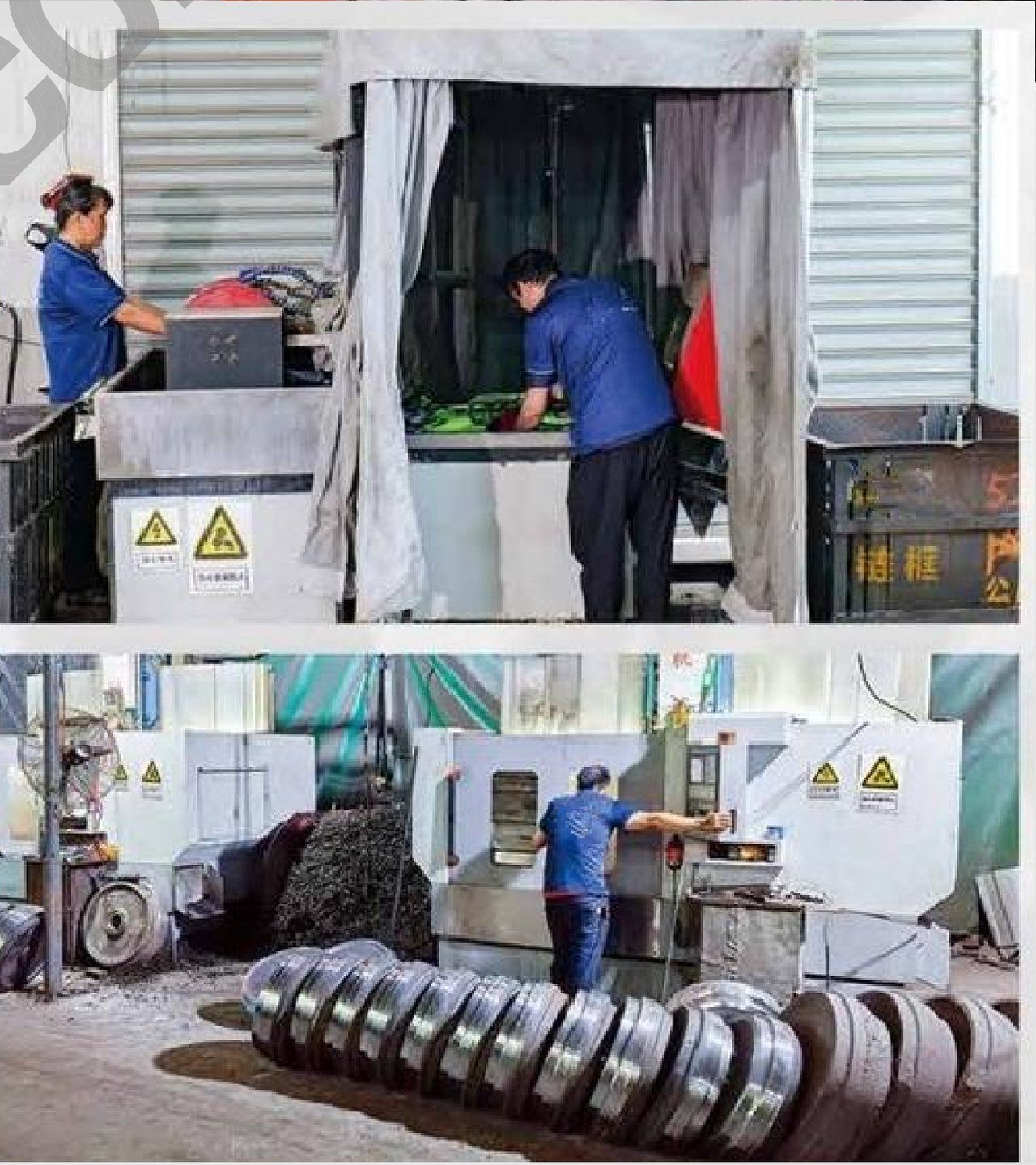
Loose movement inside a container is what turns corrosion into impact damage. The restraint plan has to be built around real forces: the part’s weight, centre of gravity, contact points and geometry. Chocks, timber, cradles, chains, straps and lashing points must suit the load and comply with carrier rules. The parking brake is never the primary restraint on a machine, and for parts the equivalent rule is that a heavy casting must not be held in place by its own weight alone.
Three details prevent most of the damage seen on arrival. Restraints must not be routed across sharp edges, painted surfaces, hoses or wiring, because a strap that bites into an edge leaves exactly the kind of mark that gets blamed on the steel. Each restraint must stay accessible for inspection, and tensioning one point must not loosen another. And every detached item and every spare-parts crate needs its own independent restraint — parts that are small enough to move are exactly the parts that disappear (source: Zhongtai Supply Chain export packaging checklist).
The container itself gets inspected before loading: structural damage, water ingress, contamination, protruding fasteners and floor condition. Dimensions and weight are confirmed against the selected container and loading method, including door clearance and room to work safely. Loose tools, manuals, keys and small fittings are inventoried into labelled packages rather than left in the cab or on the floor. After loading, the packed configuration is compared against the packing list and the photo record, and photographs of the completed blocking and bracing are taken from multiple angles — including the part-to-floor contact points and every lashing connection — before the doors close (source: Zhongtai Supply Chain).

Trade Terms and the Question Buyers Keep Asking
Packaging decisions sit alongside the commercial terms, because the choice of term changes who carries the risk at each point. For the same shipment, FOB and CIF put very different risk on the seller and buyer, and the sensible approach is to settle the boundary before the quotation is accepted rather than after a claim (source: Hangzhou Weigao Transmission).
FOB transfers risk when the shipment is on board at the port of origin; the buyer books and insures. CIF puts freight and insurance on the seller to the destination port, which suits buyers who want to lock landed cost. DDP takes customs clearance, duties and delivery to the door, which suits buyers without import qualifications — but it carries the highest risk exposure for the seller and needs a clear understanding of the destination’s clearance process.
Two practical points from the same source. On payment, 30 percent advance with the balance against a copy of the bill of lading, or a sight letter of credit, is the normal structure; a long account period consumes margin that wear parts pricing does not leave room for. On insurance, the amount is generally covered at 110 percent of the invoice value on a CIF basis. And on transit time, roughly 7 to 10 days from major Chinese ports to Southeast Asia and 25 to 35 days to Europe means customs clearance and inland delivery have to be reserved in the delivery commitment rather than assumed away.
One More Thing to Settle at Quotation Stage
Wear parts buyers increasingly want the spare parts list agreed at quotation rather than after the machine is running. The logic is simple: a set of consumables costs a small fraction of the main order, but if one item is missing the entire line can be down for weeks. That is why more Chinese manufacturers are selling not just products but working-condition assessment, selection calculations and spare parts lists alongside the machine — and why an enquiry that states the operating environment and the annual consumption up front gets a better quotation than one that only names a part number (source: Hangzhou Weigao Transmission).
At Siderwin, the same principle applies to undercarriage and GET orders. We would rather size the first order against the wear percentages you measured and the hours the machine runs, so that the reorder is predictable. Send the machine model, the part numbers, the application and the quantities, and we will come back with the specification, the price and the lead time — together with the packaging, marking and documentation arrangement. info@siderwin.com | WhatsApp/Tel: +86 181 4265 7536 | www.siderwin.com
Contact Hunan Siderwin Construction Machinery Co., Ltd
Undercarriage parts, bucket teeth, adapters, cutting edges and piling foundation tools
Email: info@siderwin.com | WhatsApp/Tel: +86 181 4265 7536 | Web: www.siderwin.com