Undercarriage Replacement Order: Rollers, Sprockets, Chain
Published: November 9, 2026 | Hunan Siderwin Construction Machinery Co., Ltd
Undercarriage work gets scheduled by whichever component failed visibly. A roller started weeping grease on Friday, so the roller comes out on Monday. A customer looking at a quotation for four rollers, one idler and a sprocket has been given a parts list, not a plan — and the difference shows up in how many of those parts are still on the machine eighteen months later. The reason is mechanical rather than administrative: worn components accelerate wear on everything they touch. A new roller fitted beside a worn idler does not get a full service life, because the idler it runs against is no longer holding the chain on the line it was designed to hold.
This guide sets out the order in which undercarriage components should be replaced, the measurements that decide when each one is due, and the cases where a staged repair makes more sense than a complete set. It is written for the fleet manager and the workshop planner who has to approve the order, not for the technician who will do the work.
The Principle That Drives Every Decision
Undercarriage wear is systemic. The track chain is the foundation; as pins and bushings wear, the chain stretches through pitch elongation. A stretched chain changes the geometry of the whole system: it rides higher on the roller treads, which increases the load path on the pins and bushings. Worn rollers change the chain’s running geometry, which accelerates pin and bushing wear. A worn idler misguides the entire track and distributes load incorrectly across everything beneath the machine, and a sprocket tooth that has hooked into a hook profile grinds the chain at every single revolution.
Every one of those effects runs in the same direction. A worn part does not simply wear out — it makes the parts around it wear faster. This is why the industry consistently advises replacing the chain and the sprocket as a pair, and why a new chain fitted to a worn sprocket begins wearing immediately rather than starting a fresh service interval (source: Imara Engineering Supplies, excavator undercarriage replacement guide; AFT Parts undercarriage knowledge base).
The Wear Order, and Why It Holds
On a machine working mixed ground, the sequence of failure is consistent enough to plan around. Bottom rollers go first. They carry the machine’s weight continuously plus the axial loads of turning, and their seals are the first thing grit and water breaches. The front idler follows, particularly on machines that pivot frequently, because it carries the tensioning load and takes the lateral forces of turning. The sprocket is next, its teeth peening and hooking as they mesh with the links — and once hooked, the sprocket begins stretching the belt rather than driving it. The chain is usually last, because nothing stretches it until the components around it have stopped doing their jobs (source: AFT Parts, excavator undercarriage parts guide, 2026).
That order is the reason the cheapest repair is almost always the earliest one. A weeping roller seal caught in a walk-around is one part. The same seal ignored becomes a roller, a section of chain and a sprocket (source: AFT Parts).
| Component | Wear limit to read | What it triggers |
|---|---|---|
| Track chain | Up to 2% elongation: monitor. 2–3%: plan replacement. Over 3%: replace immediately | Chain and sprocket as a pair |
| Bottom roller | Tread depth at minimum: replace, do not monitor for another interval | Individual replacement while chain is within life |
| Front idler | Seal leakage at the hub, or tread wear altering tension geometry | Do not fit new chain or rollers around a worn idler |
| Drive sprocket | Hook or pointer profile on the tooth tips | Replace together with the chain |
| Track shoes | Grouser height worn flat; bolt holes elongated by loose fasteners | Scheduled by ground condition, not by the chain |
The chain elongation limits in the table are the ones most service manuals publish, and they are worth putting in your own inspection sheet because they convert a subjective judgement into a number (source: Imara Engineering Supplies). Measuring chain pitch is a five-minute job with a caliper: measure across a set number of links and compare with the new specification. Track rollers are inspected every 500 hours. A complete undercarriage inspection is scheduled every 1,000 to 2,000 operating hours, and more frequently in abrasive or high-impact duty (source: AFT Parts, 6-step undercarriage replacement guide, 2026).
Two Replacement Strategies, and When Each One Is Right
There are only two defensible approaches, and the decision between them follows from one measurement: chain elongation.
Staged replacement applies while the chain is within its service life — below about 2 percent elongation. Individual components are replaced as they reach end of life: worn rollers, idlers and seals go out on their own schedule, and new sprockets are fitted only when the teeth show the hook profile. In this situation a matched wear set for the rollers, grouped by remaining life rather than by failure date, is usually the most economical approach (source: ValueTrack Parts; ITR Pacific undercarriage guidance).
System replacement applies once the chain reaches its wear limit. The chain and sprocket are replaced together at minimum, and the most cost-effective route at chain end-of-life is a complete undercarriage replacement — chain, sprockets, bottom rollers, carrier rollers and idlers replaced simultaneously. That maximises the service interval of the new components and eliminates the compounding wear that partial replacement creates (source: Imara Engineering Supplies).
There is a second reason for the system approach that is easy to miss: a worn idler left in service while new chain and rollers are fitted will shorten the life of those new components significantly, and seal failure on an idler means the internal lubricant is escaping and the idler is running dry. Replacing it later means dismantling the machine a second time (source: Imara Engineering Supplies).
How to Read a Wear Measurement Properly
Two errors account for most of the wrong parts being ordered. The first is measuring the wrong thing, and the second is measuring a worn dimension and treating it as the specification.
Chain pitch is the number that drives everything else. On a typical 20-ton class chain, new pitch is about 190 mm; stretched beyond about 200 mm — roughly 5 percent elongation — the chain is at end of life (source: Jiuming used-equipment undercarriage guide). For internal bushing wear, measure the distance between track pin centres at three locations and average the results, then compare with the manufacturer specification (source: AFT Parts). Where a component has been reduced to about 85 percent of its original diameter, the industry practice is to rotate it 180 degrees rather than scrap it immediately.
The second error is subtler and more expensive. A worn running diameter does not describe the original replacement specification. If the roller you are removing has lost 3 mm of tread radius, quoting a new roller at the worn diameter guarantees a part that is 6 mm undersized. The correct method is to identify which dimensions are original and which have been reduced by wear, and to quote the original figure (source: Integrated Care Manager, Hyundai carrier roller compatibility guide).
Fitment confirmation comes down to a small number of measurements, all taken from the part being removed rather than from a catalogue drawing. For a roller: running-surface diameter and width, bore or shaft diameter with the hardware removed, flange type, and mounting arrangement. For an idler: wheel diameter, running-surface width, flange height, bore and mounting. For a sprocket: tooth count, pitch, bore and mounting geometry. Then the part number, cross-referenced against machine model and serial number — because undercarriage specification changes across build series, the serial number is what identifies the part (source: AFT Parts, undercarriage parts guide).
The Cost Case for Getting the Sequence Right
The financial argument is straightforward once the numbers are put side by side. A well-maintained 20-ton undercarriage runs roughly 4,000 to 6,000 hours; against a rebuild figure of USD 11,000 over 5,000 hours, base cost runs about USD 2.20 per hour, rising past USD 5.50 per hour on 45-ton machines in abrasive duty (source: Jiuming used-equipment cost analyses). Every 10 percent of wear consumed on a 31-ton class set represents roughly USD 600 to 900 of rebuild budget.
That is the number that should decide whether you replace one roller or the whole set. If the chain is at 2.5 percent elongation and three rollers are near end of life, a staged replacement of the rollers plus a planned chain-and-sprocket job in the same window avoids paying for a second teardown later. If the chain is at 3.1 percent and the sprocket already shows the hook profile, a complete set costs less than a new chain with a new sprocket, three rollers and one idler fitted at different dates — because the mixed-age set keeps re-invoicing in small, downtime-heavy steps (source: ValueTrack Parts; ITR Pacific).
Running a new chain on a worn sprocket roughly doubles wear on both parts, and pairing a new chain with heavily worn rollers destroys the new chain’s bushings early (source: XCG Machinery wear data). Those are the two most expensive mistakes available in undercarriage work, and both are avoided entirely by measuring the chain before ordering anything else.
What to Send With Your Enquiry
A short, complete inspection record turns a parts list into a quotation a supplier can act on. Six items cover it:
- Machine identification — model, serial number and undercarriage configuration, including whether it has been modified or replaced.
- Chain pitch measurement — the measurement across a defined number of links, compared with the new specification, plus the percentage elongation.
- Position-based wear findings — every roller, carrier roller and idler position labelled and photographed, with tread depth and flange height recorded.
- Sprocket condition — tooth profile described as even, hooked or pointed, with photographs.
- Application — material worked, hours per week, ground conditions, and the operating climate.
- Quantities and commercial terms — quantity per machine, fleet size, annual demand, delivery destination, and whether you want a complete matched set or a staged list.
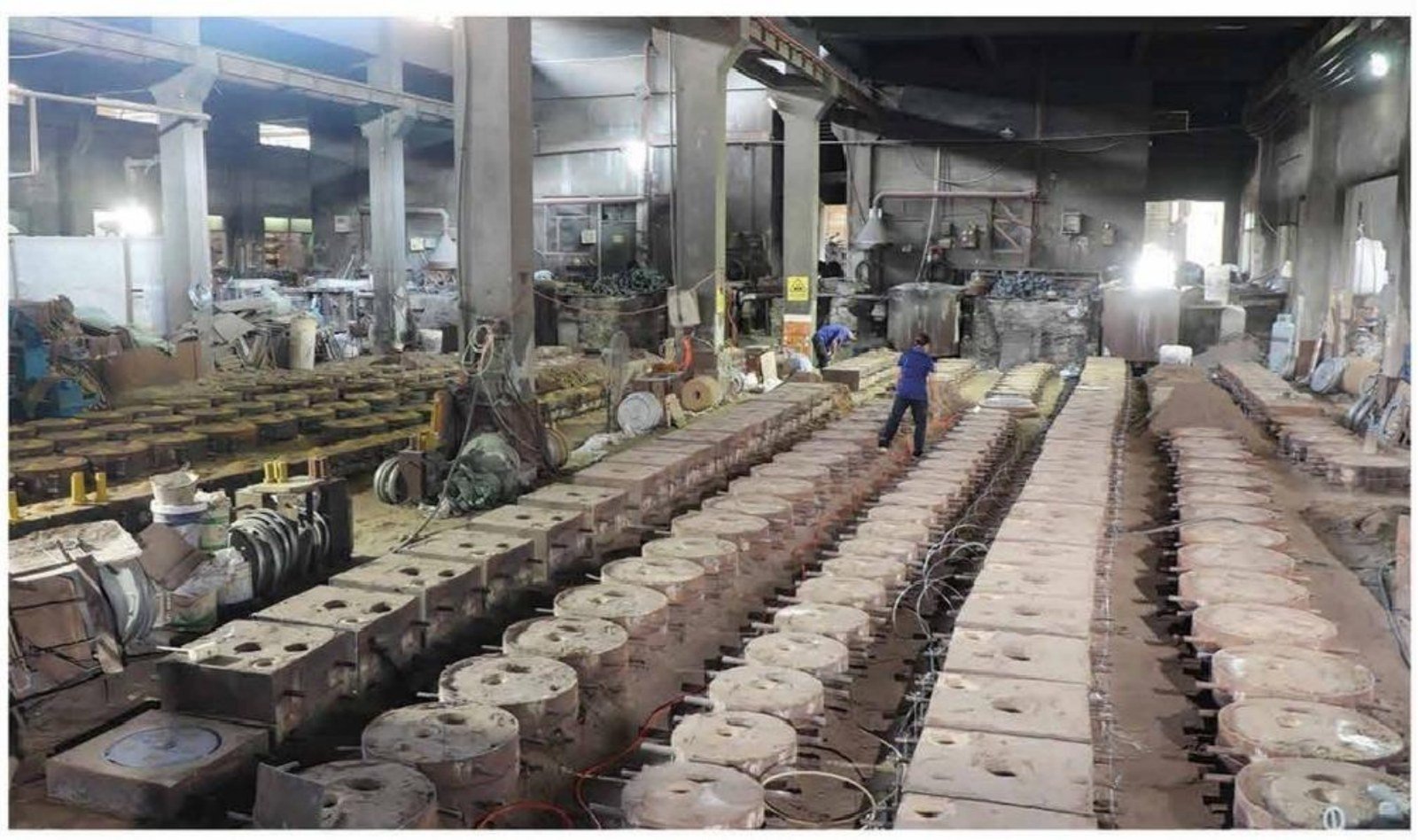
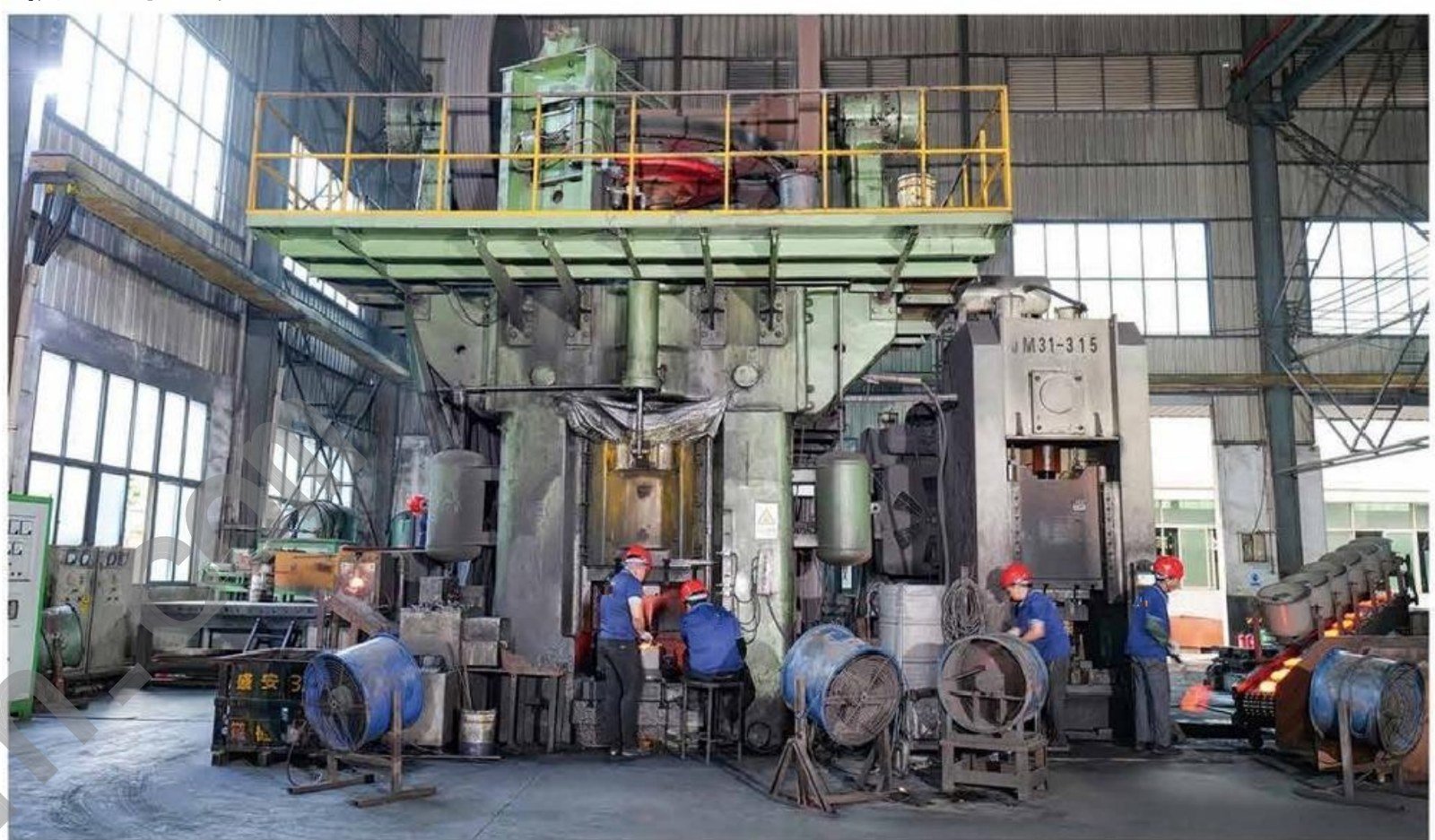
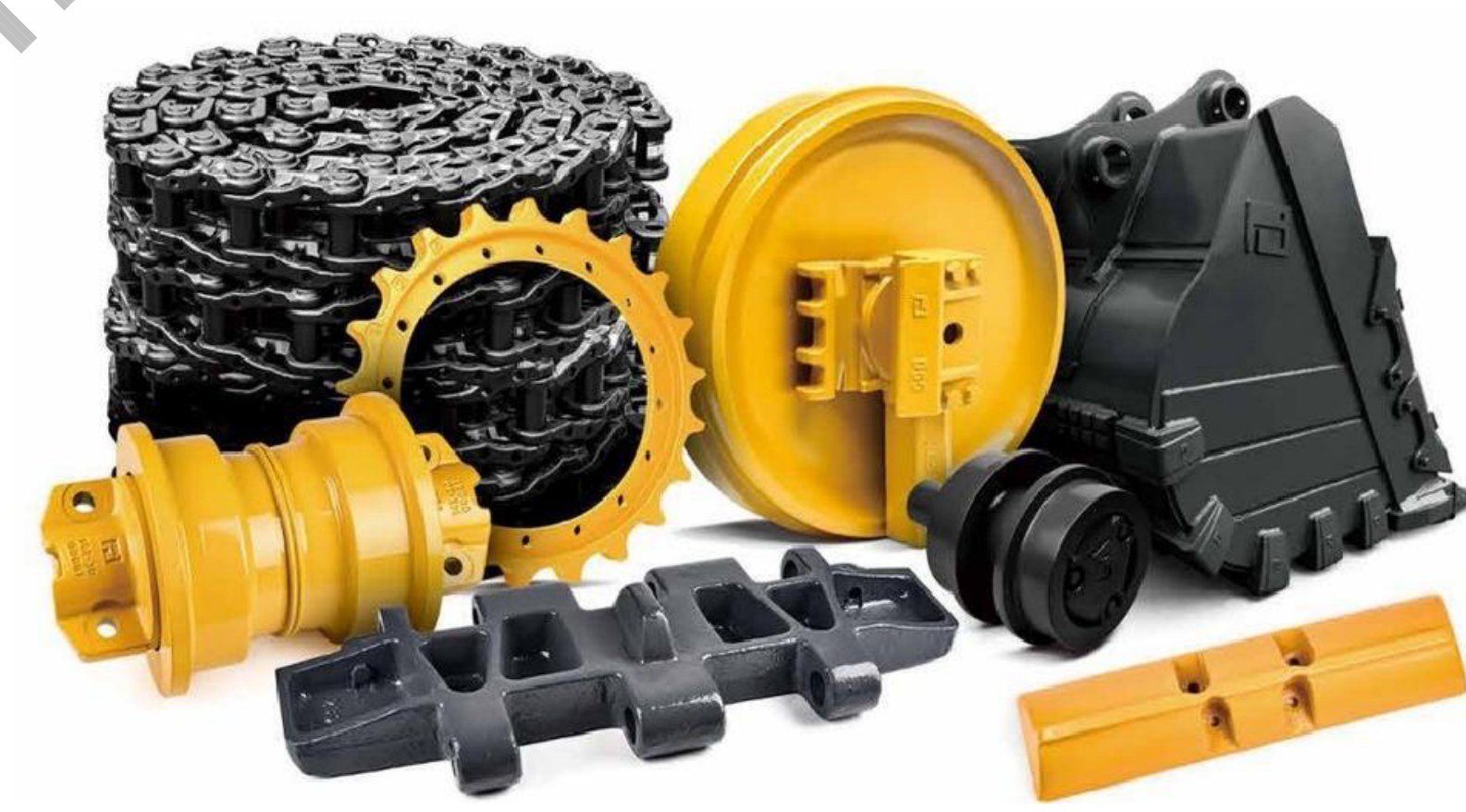
Siderwin supplies track link assemblies, track shoes, swamp and crane track shoes, front idlers, sprockets and segments, track rollers and carrier rollers from an 80,000 m² plant in Liuyang with a 4,000-ton forging line, in-house heat treatment and a physico-chemical laboratory for hardness, impact and metallographic testing. We are an OEM supplier to SANY, Sunward and Zoomlion, and export undercarriage parts to more than 20 countries. Standard catalogue items ship in 0 to 7 days, customised designs in 7 to 15 days depending on design and production complexity, with 30 percent advance payment against bill of lading or L/C at sight for large orders.
Send us the measurements and the photographs, and our engineers will quote a sequenced matched set rather than a pile of parts. info@siderwin.com | WhatsApp/Tel: +86 181 4265 7536 | www.siderwin.com
Contact Hunan Siderwin Construction Machinery Co., Ltd
Track chains, rollers, idlers, sprockets, track shoes and ground engaging tools
Email: info@siderwin.com | WhatsApp/Tel: +86 181 4265 7536 | Web: www.siderwin.com