Undercarriage Parts Market 2026: Market Size, Growth and What Buyers Should Do Now
Published: November 9, 2026 | Hunan Siderwin Construction Machinery Co., Ltd
Ask a heavy equipment dealer what they sold this year and they will talk about excavators. Ask a fleet manager what they spent and they will talk about undercarriage. The two numbers are not the same, and the gap is where the most profitable business in tracked equipment sits.
Undercarriage parts — track chains, track shoes, rollers, carrier rollers, front idlers, sprockets, pins and bushings — are the only major component group on a tracked machine that is consumed on a fixed clock rather than on a purchase cycle. Everything else can wait until the machine is sold. The undercarriage cannot. That single structural fact is why the category keeps compounding through the cycles that slow new-equipment demand, and why it is the fastest-growing part of the wear parts market in 2026.
This is our read of the 2026 data: where the market is, how it is structured, what changed this year, and what a buyer should do about it.
The Market in 2026: Size and Growth
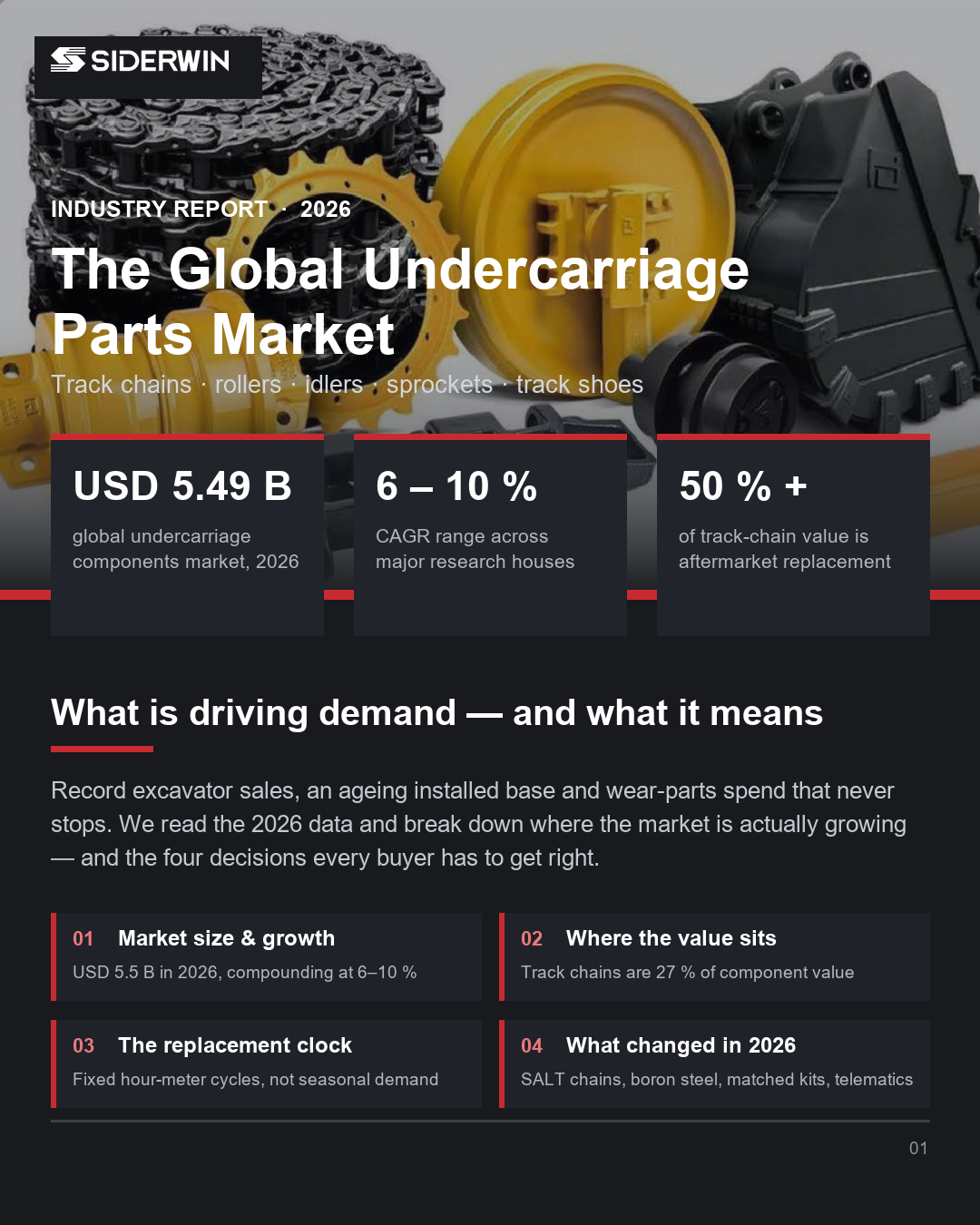
Global undercarriage components were valued at USD 5.16 billion in 2025 and are projected at USD 5.49 billion for 2026, expanding to approximately USD 7.93 billion by 2032 at a 6.33 percent compound annual growth rate (source: Report Prime, 2026). Other research houses measuring a broader definition of heavy equipment undercarriage components arrive at USD 8.17 billion for 2026 rising to USD 14.58 billion by 2032, a 9.99 percent CAGR (source: GlobalInfo Research, 2026), while a third definition puts the 2026 figure at USD 7.22 billion growing to USD 10.82 billion by 2032 at 7.0 percent (source: QYResearch, 2026).
The range matters less than the direction. Every credible definition of the market puts 2026 growth between 6 and 10 percent, and all of them agree the curve does not flatten before 2032. When three independent methodologies disagree on the level but agree on the slope, the slope is the reliable signal.
Inside the market, one component line stands out. The excavator track chain alone was valued at USD 3.67 billion in 2025 and is projected at USD 3.95 billion in 2026, growing at 9.60 percent to reach USD 6.98 billion by 2032 (source: GlobalInfo Research, 2026). That makes track chains the fastest-growing major undercarriage line — and it makes chain supply the part of the category most worth watching.
Two numbers explain why. First, more than half of track chain value is aftermarket replacement rather than new-machine fitment, because a tracked machine consumes chains through abrasion, not through a calendar (source: Racer Machinery, 2026). Second, undercarriage components can account for up to 50 percent of a machine’s total maintenance cost (source: Stats Market Research, 2026). The largest single line in the parts bill of a construction machine is also the one that recurs on a schedule the customer cannot negotiate with.

Where the Value Sits: A Stable Mix
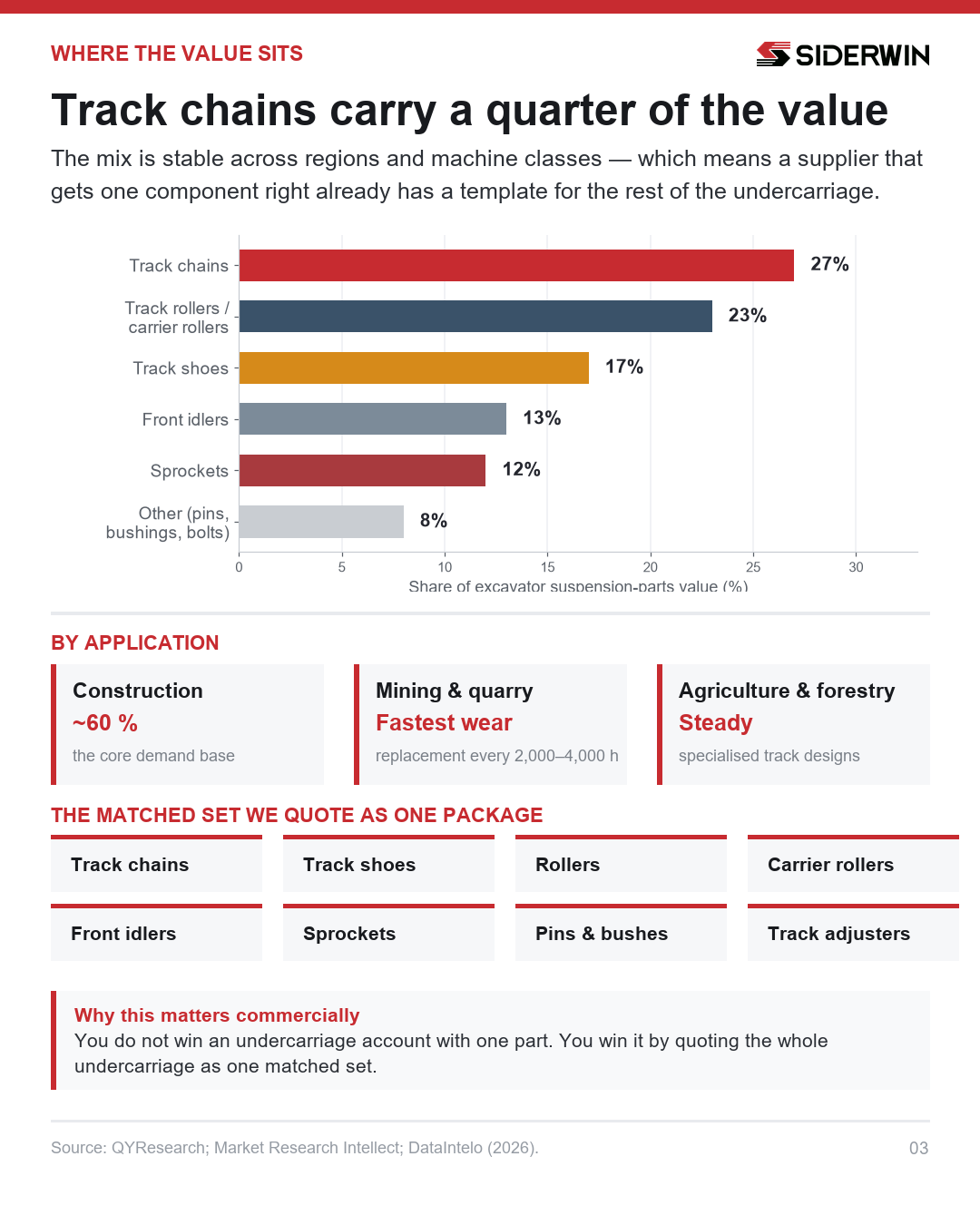
Splitting excavator suspension parts by value share gives a clear hierarchy: track chains 27 percent, track rollers and carrier rollers 23 percent, track shoes 17 percent, front idlers 13 percent, drive sprockets 12 percent, with the balance in pins, bushings and hardware (source: Market Research Intellect, 2026). A parallel study of the broader undercarriage components market puts track chains above 32 percent of type revenue, with the top ten suppliers holding over 43 percent of the market (source: QYResearch, 2026).
By application, construction accounts for roughly 60 percent of undercarriage demand, with mining and quarry the fastest-wear segment and agriculture and forestry a steady third (source: QYResearch, 2026). On the machine side, hydraulic excavators dominate demand at an estimated 50 to 60 percent of undercarriage consumption, with bulldozers at 15 to 20 percent.
The stability of this mix is the commercially interesting part. Component value shares barely move between regions and machine classes, which means a supplier that has solved one component has effectively solved the specification work for the rest. It also means the win condition is not technical novelty — it is quoting the complete matched set, consistently, on every machine a customer runs.
The Replacement Clock: Why Demand Is Scheduled, Not Seasonal
Most parts categories track the equipment cycle. Undercarriage does not. It tracks the hour meter, and the intervals are well documented.
A track chain assembly typically runs 4,000 to 6,000 operating hours in standard duty, dropping to 3,000 to 5,000 hours in severe duty such as rocky terrain or continuous road travel (source: IndexBox, Japan Earthmoving Equipment Undercarriage analysis). Track rollers run roughly 3,500 to 6,500 hours depending on application, front idlers 5,000 to 8,000 hours in normal conditions and as little as 3,000 to 4,000 hours in mining with extreme lateral loading, drive sprockets 5,000 to 8,000 hours, and track pins and bushings 3,000 to 5,000 hours (source: DataIntelo, 2026).
Do that arithmetic for a 20-tonne excavator running 2,000 hours a year and the pattern becomes predictable. The chain is replaced roughly every two years, rollers and idlers on a similar clock, sprockets every third rebuild. One machine generates three to four complete undercarriage sets inside its first ten years of service.
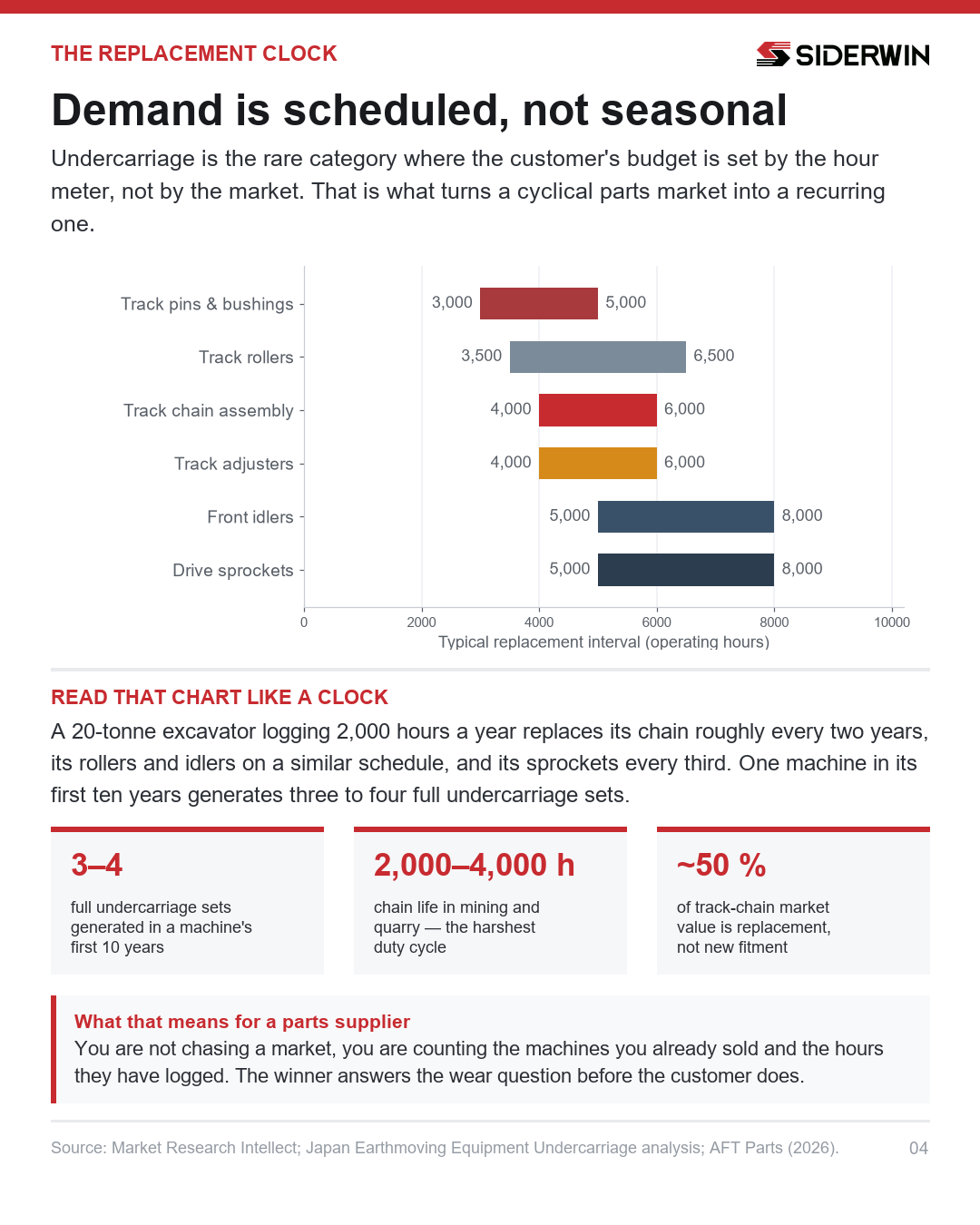
In mining and quarry the clock runs considerably faster, with track chains and bushings often requiring replacement every 2,000 to 4,000 hours of operation because abrasive rock, deep mud and extreme loads attack pin and bushing surfaces continuously (source: Stats Market Research, 2026). Adopting sealed and lubricated track systems can reduce maintenance frequency by up to 30 percent in those conditions.
The practical consequence for any supplier is that forecasting is not market research. It is counting the machines already sold and the hours they have logged.
Four Things That Changed in 2026
Sealed and lubricated chains became the default in abrasive duty
The three broad chain designs — dry, greased, and sealed and lubricated — differ in ways that matter far more than their appearance. A sealed and lubricated chain cuts internal pin-and-bushing wear by more than 80 percent compared with a dry chain, at a typical 15 to 25 percent higher initial cost (source: Racer Machinery, 2026). In rock, quarry or demolition duty that difference pays back through longer service intervals and far fewer mid-life teardowns.
Boron steel and induction hardening became the specification floor
High-carbon and boron-alloy steels, induction hardened at the pin and bushing, push surface hardness above 58 HRC and improve abrasive wear resistance by up to 30 percent over standard carbon steel, with boron alloys adding 15 to 20 percent to service life through better heat treatment (source: Racer Machinery, 2026). Field data from a 200-machine US fleet running demolition, quarry and heavy earthmoving showed 40Mn2 boron-alloy induction-hardened chains at HRC 52–58 delivering 2,200 plus operating hours against 800 to 1,000 hours for the previous aftermarket supply, with unplanned maintenance down 40 percent (source: undercarriage spare parts case study, 2026).

Buyers consolidated into matched undercarriage kits
The most expensive mistake in undercarriage work is replacing only the failed component against worn neighbours. A new chain running on worn rollers destroys itself at an accelerated rate. Buyers have responded by consolidating procurement into matched kits — chains, rollers, idlers, sprockets, pins and bushes supplied together — because that is how the undercarriage actually fails and wears as a system (source: Market Research Intellect, 2026).
Predictive maintenance moved from aspiration to practice
Link height, roller flange wear, sprocket tooth profile and operating hours are now used together to recommend a replacement window before the teardown happens. Remanufactured rollers, idlers and final-drive-adjacent components are being bought by owners seeking lower lifecycle cost without buying unverified parts, and regional stocking hubs near quarry belts are proving more effective at cutting downtime than broad but shallow catalogues (source: Market Research Intellect, 2026).
The Economics of Buying Undercarriage Well
Unit price is the least useful number in this category, and it is the number most often quoted in comparison.
Consider two chains over 10,000 hours of work. A mid-range aftermarket chain at USD 5,000 lasting 2,500 hours costs USD 2.00 per operating hour. A premium chain at USD 6,500 lasting 3,500 hours costs USD 1.86. The premium option saves USD 140 in parts cost alone, and that is before counting the machine that stood still while the chain was on the floor and the crew that was waiting for it (source: RHK Machinery, 2026). Fleet analysis from the same source found that spending 20 percent more on a track link assembly with proven heat treatment reduced total undercarriage cost per hour by 15 percent.
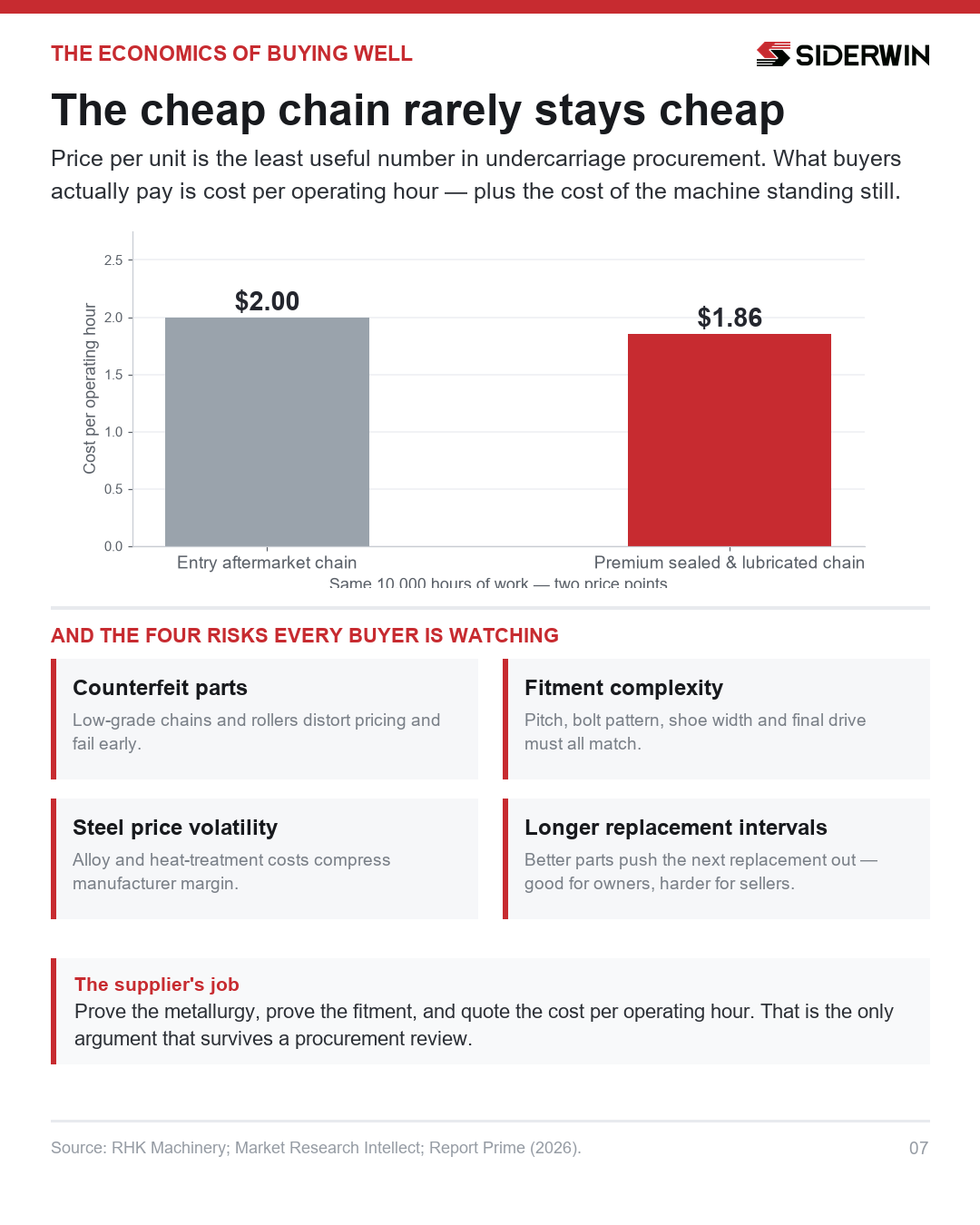
Four risks run alongside that calculation. Counterfeit and low-grade chains, rollers and sprockets compete aggressively on price in price-sensitive markets and distort every comparison made on unit price alone (source: Market Research Intellect, 2026). Fitment specificity is severe: pitch, bolt pattern, shoe width, frame geometry, operating weight and final-drive configuration must all match, because an idler that does not match accelerates chain misalignment and increases track adjustment frequency. Steel and alloy price volatility compresses margin for suppliers that sell through several distribution layers. And longer-lived parts, while better for owners, push the next replacement further out — a genuine tension between quality improvement and aftermarket volume.
Where the Machines Are: Regional Demand
Asia-Pacific now accounts for approximately 46 percent of global excavator demand, North America 21.4 percent and Europe 19.6 percent, with Africa and Latin America smaller in absolute terms but growing fastest (source: Radial Insights, 2026). One 2026 industry outlook puts the Asia-Pacific share of the global excavator market at 58 percent, with the region expected to grow 12 to 15 percent, ahead of a stable North America at roughly 180,000 units and Europe at around 220,000 units constrained by emissions regulation (source: global and China excavator market outlook, 2026).
The direction of trade is the more interesting number. Global excavator sales are forecast at approximately 1.45 million units in 2026, up around 6.8 percent from 2025, with China at 320,000 units, up 9.5 percent (source: global and China excavator market outlook, 2026). In the first half of 2026 China sold 152,320 excavators, up 26.4 percent year on year, with domestic sales up 20.4 percent and exports up 33.5 percent (source: Mach-Sales, 2026).
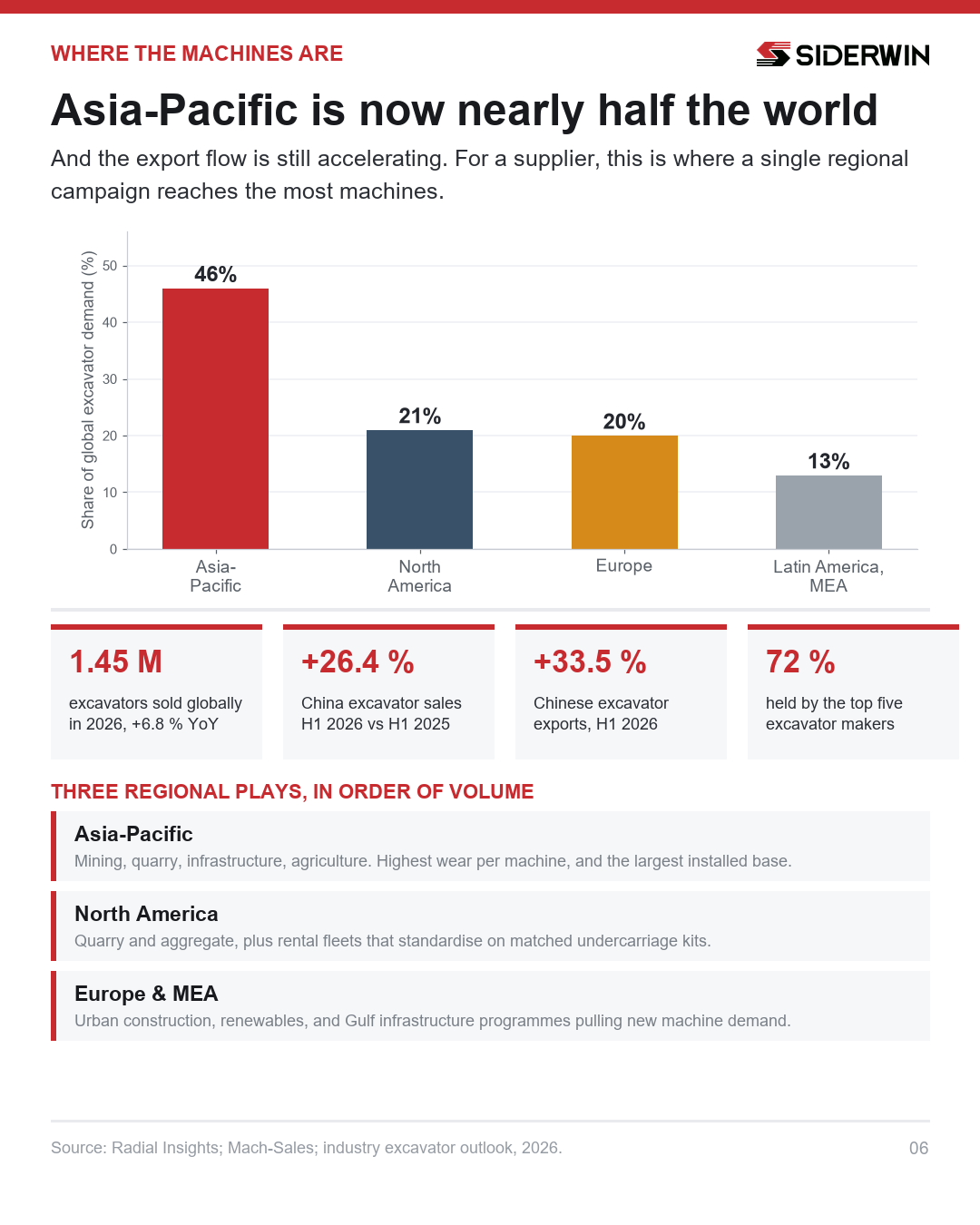
For a supplier this is the part of the market that matters most: machines are being exported faster than they are being replaced at home, and every machine that leaves a factory becomes a rolling demand curve for exactly these parts. The top five excavator manufacturers are expected to hold 72 percent of the global market in 2026 (source: global and China excavator market outlook, 2026), which means concentrated machine supply sits on top of a fragmented parts demand — the structure that favours independent, well-stocked suppliers.
Where Siderwin Sits in This Market
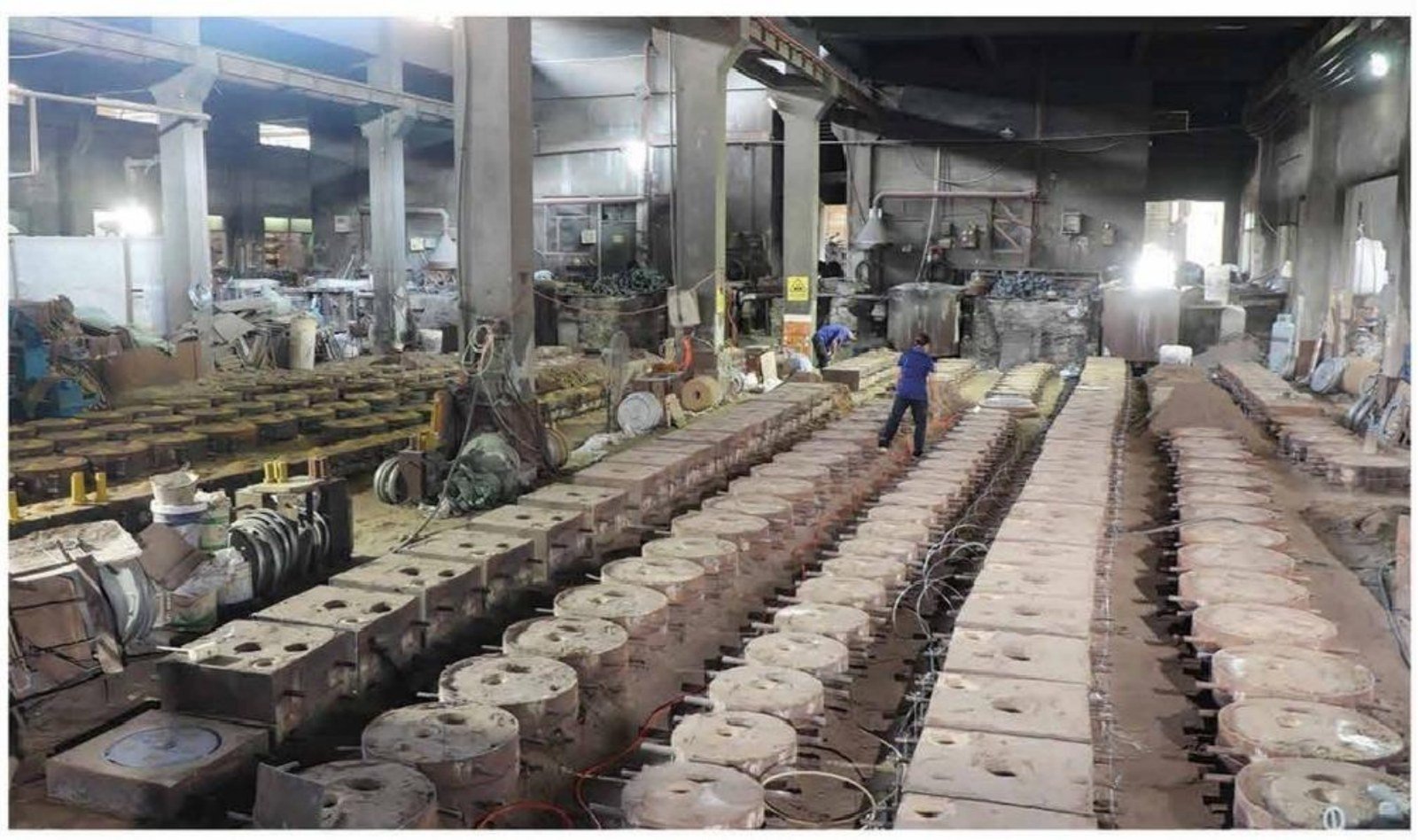
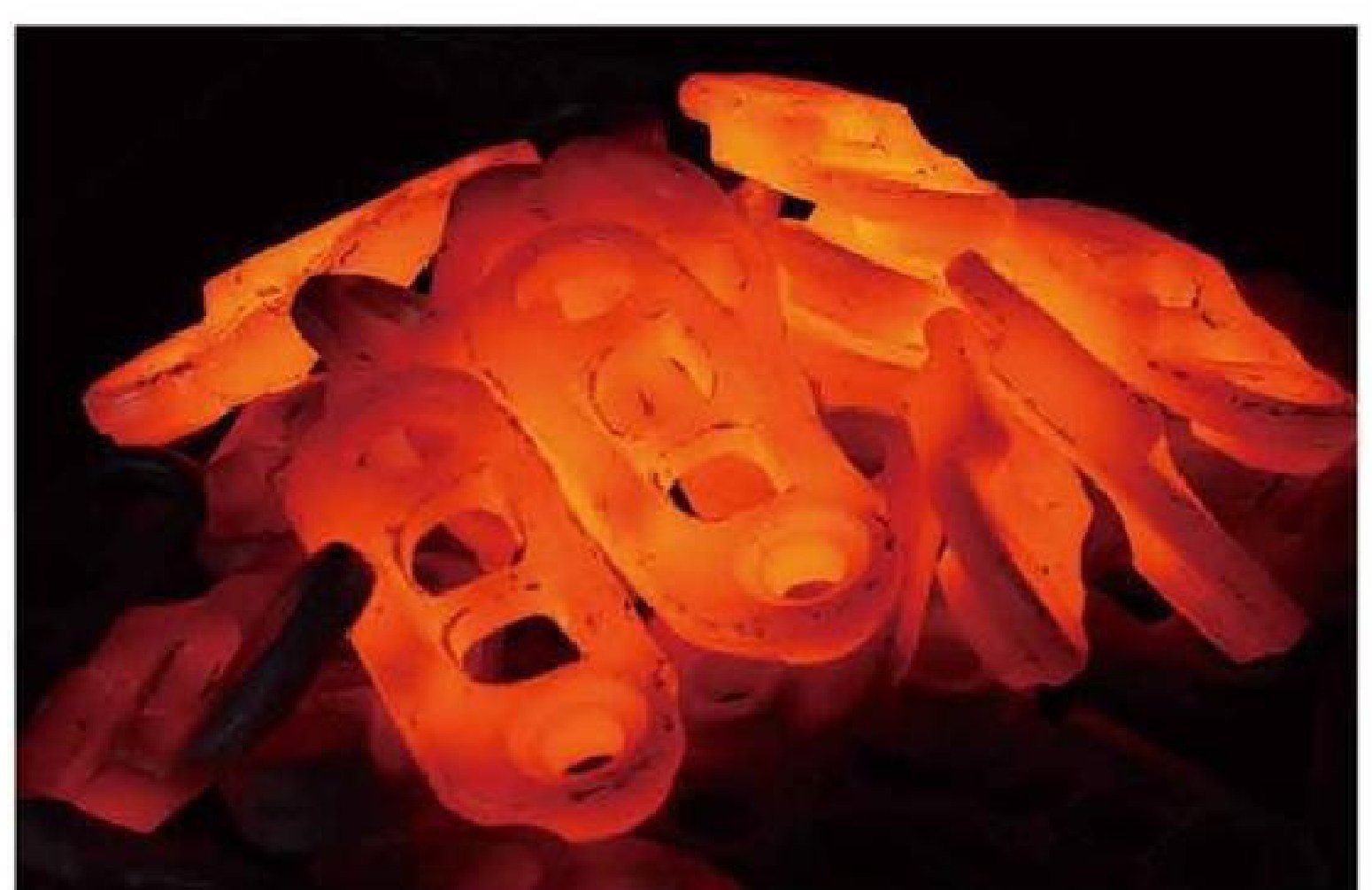
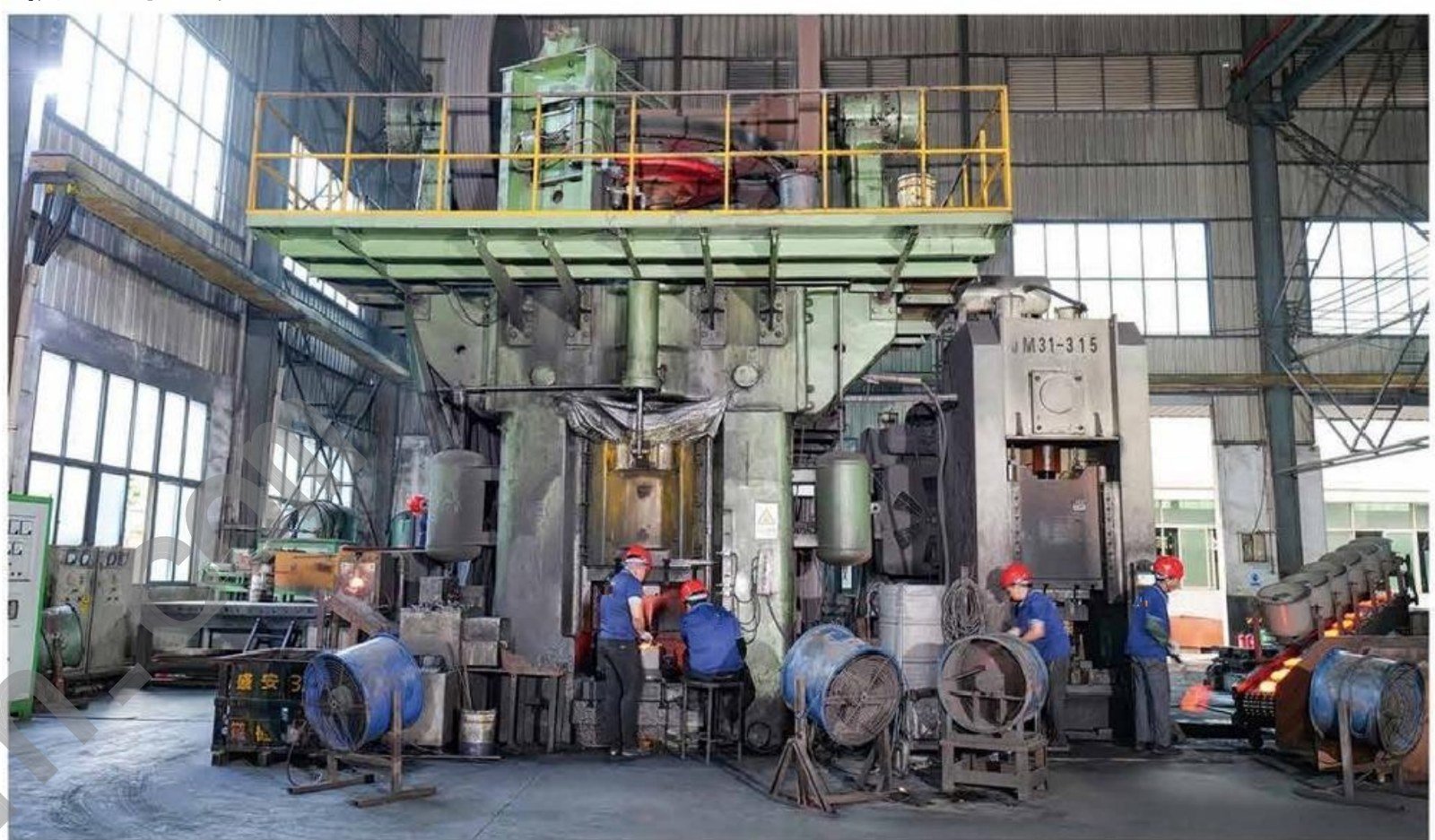
Hunan Siderwin Construction Machinery Co., Ltd manufactures the complete undercarriage range discussed in this report: track link assemblies, track shoes, track rollers and carrier rollers, front idlers and tension groups, drive sprockets and segments, pins and bushings, and track adjusters. Every component is forged, heat treated and CNC machined in-house at the Liuyang plant, which runs a 4,000-ton forging line, in-house heat treatment and a physico-chemical laboratory for hardness, impact and metallographic testing.
The company has long-term cooperation with SANY, Sunward and Zoomlion and exports to more than 20 countries. Standard catalogue items ship in 0 to 7 days and customised designs in 7 to 15 days.
What the conditions of 2026 add is not new capability but a sharper use for existing capability. When demand is scheduled rather than forecast, and the buyer is consolidating into matched sets, the deciding question is not whether a factory can make the part. It is whether that factory can make it again, to the same hardness band, with a test report, twelve months later.
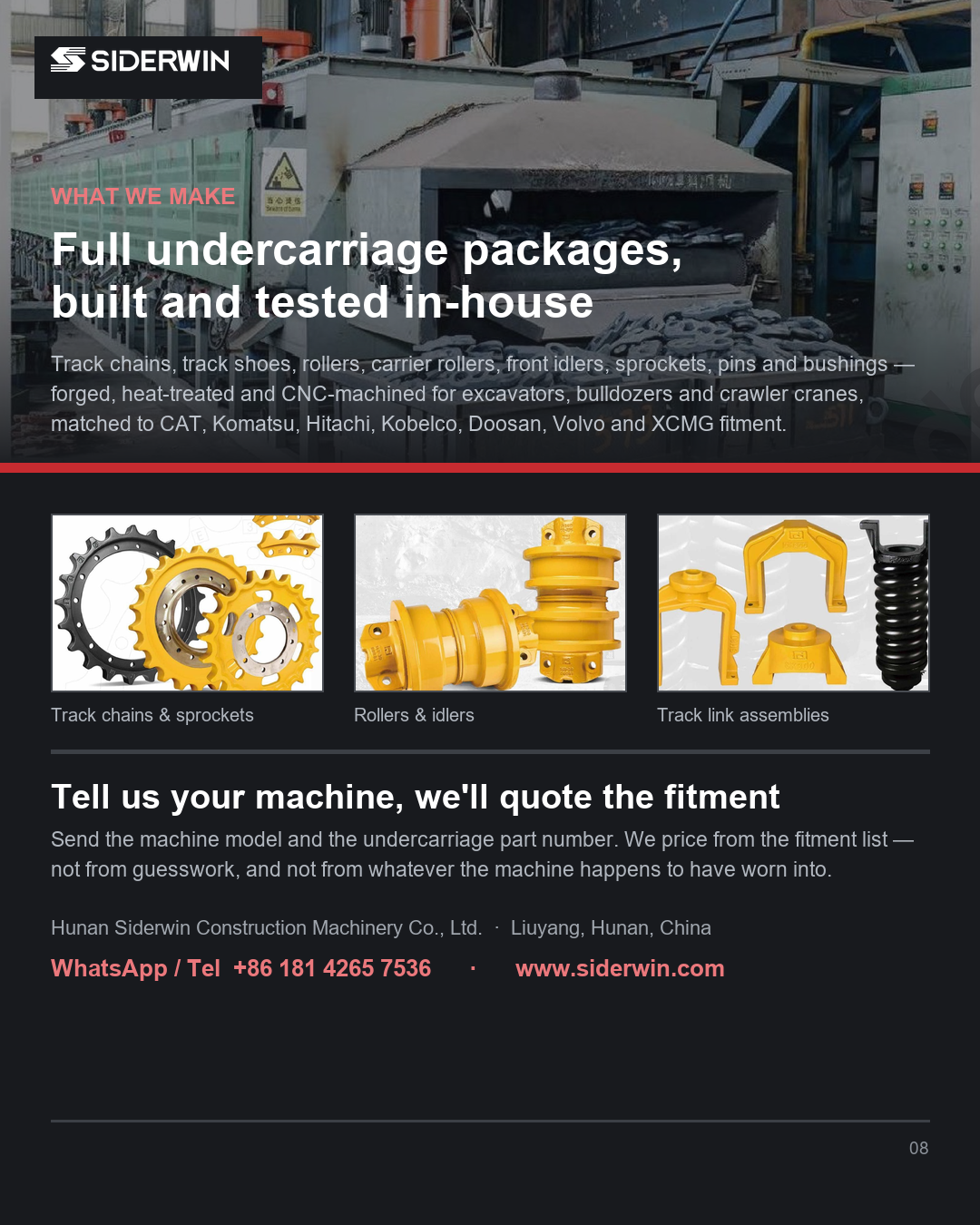
Send the machine model, the part numbers and the application, and we will come back with the specification, the price and the lead time — and the test documentation that supports them. info@siderwin.com | WhatsApp/Tel: +86 181 4265 7536 | www.siderwin.com
Contact Hunan Siderwin Construction Machinery Co., Ltd
Undercarriage parts: track chains, track shoes, rollers, carrier rollers, front idlers, sprockets, pins and bushes
Email: info@siderwin.com | WhatsApp/Tel: +86 181 4265 7536 | Web: www.siderwin.com